


How to race Challenge Barcelona Triatlon 2026 with a fast, stable cockpit


Challenge Barcelona Triatlon 2026 takes place across the weekend of 24 and 25 October in Barcelona, Spain. Saturday is dedicated to the Aquathlon and open-water events, while Sunday brings the Middle Distance, Olympic Distance, Sprint Distance and Junior Challenge. For athletes targeting the Middle Distance, the confirmed format is 1.9 km of swimming, 88 km of cycling and 21 km of running, with the bike route continuing on the Barcelona-to-Mataró course introduced in 2025.
Barcelona creates a very specific kind of race. The bike course is fast and coastal, but it is not a closed aerodynamic laboratory. You leave the city, settle onto the Maresme corridor, repeat long sections at speed and then return toward a dense urban race environment. That rewards athletes who can stay aero without becoming rigid, drink without lifting the chest and move between braking, cornering and steady power without losing their position every time the rhythm changes.
At Tetsuo, we read this race through repeatability. A fast cockpit should feel quiet when the road is simple and predictable when the road becomes busy. The target is not the lowest front end you can photograph before race day. It is the position you can return to after every turn, bottle reach and short interruption, with the forearms supported, wrists neutral and steering under control.

The organiser has confirmed the 2026 weekend dates and the main race formats. The detailed 2026 Athlete Guide may still update operational information such as check-in windows, transition access, wave starts and final course instructions, so use the official race website for the last version of those details during race week.
| Race detail | Confirmed information | Preparation impact |
|---|---|---|
| Event weekend | 24 and 25 October 2026 | Plan equipment checks and travel around a two-day event programme |
| Main triathlon day | Sunday 25 October 2026 | Middle, Olympic, Sprint and Junior racing take place on Sunday |
| Middle Distance | 1.9 km swim, 88 km bike, 21 km run | Prioritise sustained aerodynamics, controlled power and easy hydration access |
| Olympic Distance | 1.5 km swim, 40 km bike, 10 km run | Expect a higher intensity race where clean transitions and control still matter |
| Sprint Distance | 750 m swim, 20 km bike, 5 km run | Use a simple setup that lets you accelerate and handle the bike confidently |
| Saturday events | Aquathlon, 1.9 km open water and 3.8 km open water | Check the programme carefully if racing or supporting across both days |
| Race centre | Mar Bella and the Barcelona seafront | Rehearse transition logistics and allow time for a busy urban event area |
| Registration | Entries are active for available categories, while some formats may use a waiting list | Check the official registration platform for current availability before making travel plans |
One detail deserves precision. Some summary pages round the Middle Distance bike leg to 90 km, while the 2026 event announcement specifically states 88 km and says the route follows the course introduced in 2025. We use the 88 km figure here because it is the distance stated in the dedicated 2026 announcement.
The attraction of Challenge Barcelona is obvious: a sea swim, a long coastal bike leg and a run on the Barcelona seafront. The performance challenge is subtler. Fast roads make small movements expensive. Every time you lift the chest to drink, shrug the shoulders, over-grip the extensions or sit up because pad pressure becomes uncomfortable, you give away part of the aerodynamic advantage you built into the bike.
A good race position is dynamic inside a controlled range. Leave the extensions when control requires it, then settle back into the same support without searching for the position.
The Middle Distance swim is held off Mar Bella beach. The 2025 version used a single-lap 1.9 km course, and the 2026 event keeps the same Middle Distance format. Coastal water can feel very different from a pool even on a calm morning, so the first objective is not speed. It is establishing breathing, sighting and line choice before the field stretches out.
Practise the opening minutes of open-water sessions at controlled intensity. Sight without turning the action into a full upper-body movement, then return to your normal stroke quickly. The cleaner the swim exit, the easier it is to start the bike with control.

The 2026 announcement confirms that the 88 km bike leg follows the course introduced in 2025 between Barcelona and Mataró. That route was built around a connector from the Mar Bella area toward Montgat, two long coastal laps on the Maresme corridor and a final return into Barcelona. The identity is flat and fast, which makes aerodynamic efficiency one of the clearest opportunities in the race.
Do not interpret flat as automatic. On a fast course, power spikes often come from impatience rather than terrain. Riders accelerate hard after turns, close gaps they did not need to close and push into changes in wind because speed has dropped on the computer. Those decisions create variability that can feel harmless for the first hour and become expensive on the run.
Treat the 88 km as a long sequence of stable blocks. Build speed gradually after transition, settle into your planned power, let the aero position do its job and use the road ahead to decide when you need to leave the extensions. The most useful number on this course is not peak speed. It is how much of the ride you can complete at controlled effort while staying comfortable enough to run well.

The Middle Distance run is 21 km and uses the Barcelona seafront, an environment that gives strong spectator support but very little space to hide a pacing mistake. The first kilometres should feel deliberately controlled. If the bike has been smooth, you should be able to establish cadence without fighting heavy shoulders, a tight lower back or the feeling that the first kilometre needs to repair the previous two hours.
A well-built cockpit contributes here indirectly. Stable forearm support and a position you can hold without constant muscular tension reduce the upper-body fatigue that often appears as poor running posture. The bike setup is not only about the bike split. It should help you arrive in T2 ready to run.

For most age-group athletes, the pacing target is simple: hold back early, minimise unnecessary surges and make the final third of the bike look similar to the first. Use the opening kilometres to stabilise breathing and nutrition, then move into race effort in stages. On the long coastal sections, let the position reduce drag instead of creating speed with extra power.
Wind direction can change the feel of the Maresme corridor. A headwind may reduce speed while power remains correct. A tailwind may make the same effort look spectacular. In both cases, race the effort and the handling conditions rather than the ego of the speed display.
Every corner, aid interaction or short technical section creates a decision point. The temptation is to sprint back to cruising speed. A better approach is progressive acceleration: build pressure through the pedals, let cadence rise and return to the extensions only when the bike is stable and the line is clear.
This matters because repeated short spikes accumulate. One acceleration will not damage a race. Dozens of them can. If you finish each interruption with a smooth reset, you protect energy and make the cockpit easier to use because the upper body is not constantly bracing against sudden changes in force.
Challenge Barcelona Triatlon 2026 is a strong argument for a front end built around support rather than aggression. The faster the road, the more valuable it becomes to keep the torso quiet. That starts with pad contact, then reach, then tilt and hand position. If those elements work together, you can stay aero without using the hands as a structural support.
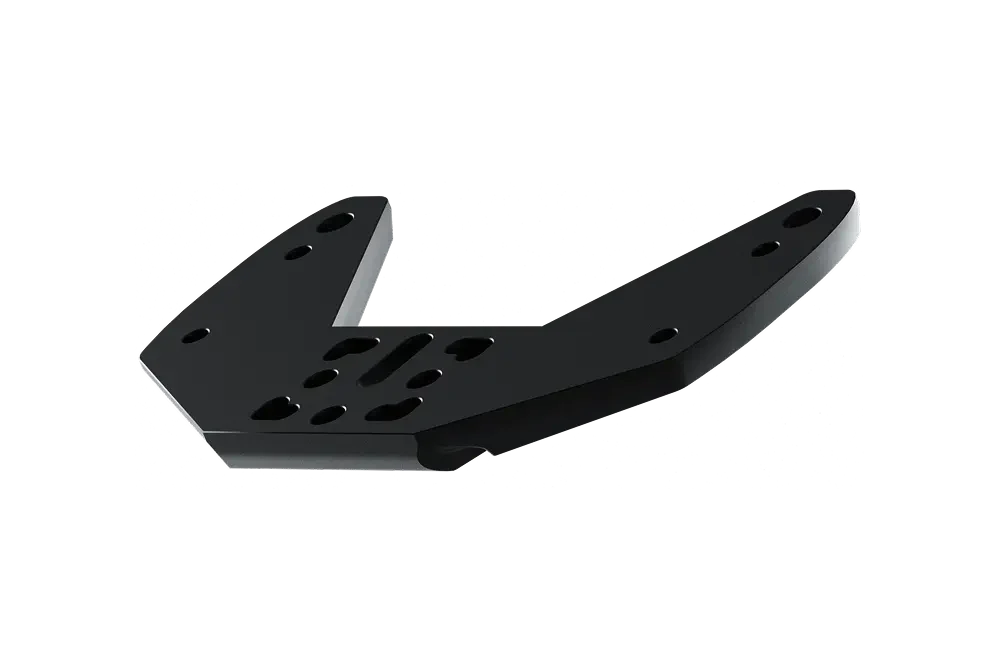
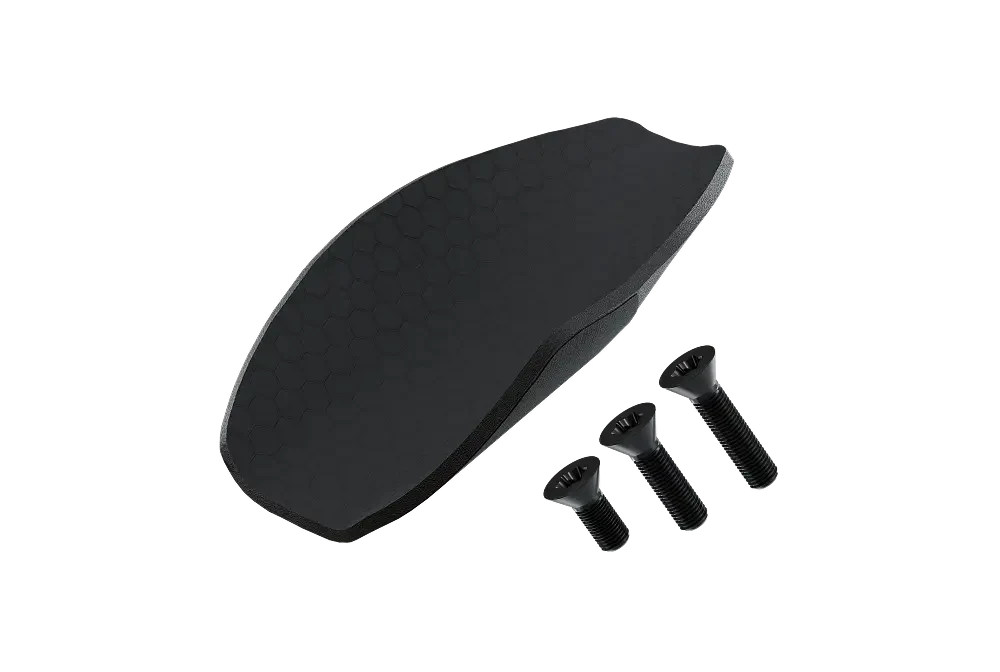
For athletes who want a complete long-course front end, our Masamune system is built around a unidirectional carbon monocoque body, adjustable hand position, removable foam and a modular platform for fit and accessories. For a simpler carbon arm-support route, TAO X3 offers adjustable support, removable foam and compatibility with our wedge system.
The product choice is secondary to the fit logic. Before changing hardware, document your current pad stack, reach, width and extension angle. Our guide to triathlon aerobar measurements explains how to create a baseline so you can make changes without losing the position that already works.
If the pad contact is too small or too far back, you compensate by gripping the extensions. If the reach is too long, the shoulders move forward and the neck begins to work harder. If the stack is too low, breathing can become restricted even if the position looks aerodynamic from the side.
Fix support first. Aim for a contact area that lets the forearms carry load without pressure concentrating on one point. Then set reach so the shoulders can remain down and relaxed. Only after that should you reduce stack or narrow the front end. If you want a structured adjustment sequence, use our guide on how to adjust aerobar position for speed and comfort.
Wrist alignment is one of the easiest cockpit details to ignore and one of the first to become obvious late in a race. If the extensions force the wrists into an awkward angle, the rider starts squeezing, changing elbow pressure and moving the shoulders. The position becomes progressively less aerodynamic because it becomes progressively less comfortable.
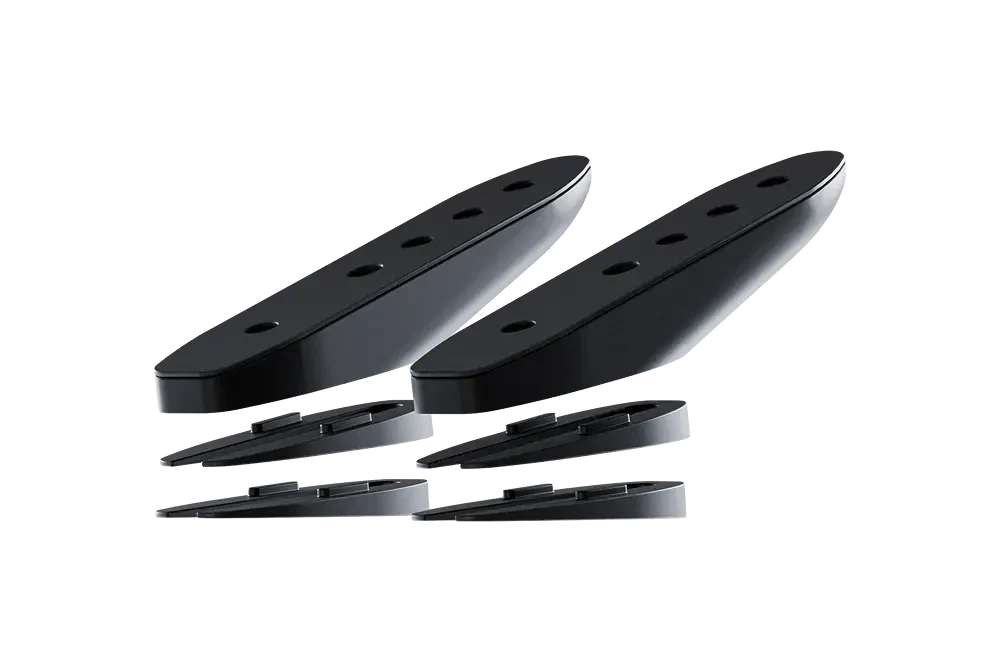
Our K Wedges provide controlled angle options from 10 to 20 degrees and can also change reach. The point is not to copy a specific tilt from another athlete. Use the adjustment range to find a hand position that lets you relax while maintaining clean steering inputs.
A coastal Middle Distance race is long enough for poor drinking access to become a real performance problem. The fastest hydration system is the one you can use on schedule without lifting the chest, searching for the bottle or disrupting steering. That is why we treat hydration as part of the cockpit rather than as storage added at the end.
A single front bottle can be enough for athletes who prefer a minimal setup and plan to use on-course support. Our Bottle holder includes adjustable angle so the bottle can follow the natural path of the hand. For more carrying capacity, the Bottle holder bar can support one to three standard cages within the front-end system.
Whatever you choose, test the complete movement outdoors. Remove the bottle, drink, return it and settle back onto the pads without looking down for longer than necessary. Repeat the action when tired. Our aerobar hydration setup guide goes deeper into bottle angle, access and race-duration choices.
A head unit should give information without forcing a repeated head movement. Position it where you can read power, pace or distance with a small change in eye line, not a full neck extension. Our Garmin/Wahoo Holder is designed to integrate with the Tetsuo cockpit system, which helps keep hydration, hand position and data access inside one organised front end.
Do not overload the screen on race day. A few useful fields are better than a dashboard that makes you search for information. The goal is to confirm execution, not to turn every kilometre into a new decision.
Use training to rehearse the actions Barcelona will repeatedly demand: enter and leave aero cleanly, accelerate without a surge, drink without posture drift and keep controlled power when the front end no longer feels fresh.
| Session | Execution | What it trains |
|---|---|---|
| Aero endurance | 3 to 4 blocks of 20 to 30 minutes at endurance or race effort | Forearm support, breathing and stable head position |
| Reset practice | Leave aero every 5 minutes, brake lightly, accelerate smoothly and resettle | Repeatable transitions between control and speed |
| Hydration rehearsal | Drink at the planned race frequency during steady aero blocks | Bottle access without upper-body movement |
| Wind handling | Ride an exposed safe route at moderate intensity | Confidence, steering and decisions about when to stay aero |
| Bike-to-run brick | Finish 90 to 120 minutes of controlled riding with 20 to 40 minutes of running | Pacing discipline and transition into run cadence |
For the final weeks, reduce experimentation. If a cockpit change still needs large corrections after several sessions, it is not ready for race day. The closer you get to Barcelona, the more valuable familiarity becomes.
Race week is for verification, not reinvention. Start with the mechanical interface. Check every cockpit fastener to the correct manufacturer torque, inspect the pads and foam, confirm that extensions are symmetrical and make sure accessories cannot rotate under load. Mark key positions so you can immediately see whether something has moved during travel.
Then check function. Shift through the full range, test braking, validate the bottle system on a short ride and charge the head unit and electronic shifting system. Pack the required cables where you can find them.
If you dismantle the front end for transport, photograph the setup before packing. Record pad width, reach, stack and extension tilt. Rebuilding from numbers is faster and safer than trying to recreate a familiar feeling in a hotel room.
The race centre is around Mar Bella and the seafront in the Sant Martí district. That makes the event accessible, but urban access also means you should leave margin for road restrictions, crowds and bike movement. Do not assume a short map distance equals a short race-morning transfer.
Choose accommodation and transport around the full event programme. If you are racing Sunday, use Saturday to complete required tasks, inspect the transition area and understand the route into and out of the venue without turning the day into unnecessary time on your feet.
Registration information currently shows entries running through 22 October 2026 for available categories, subject to capacity, while some categories may move to a waiting list. Check the official platform before booking a late entry because availability can change faster than the published deadline.
Write down the sequence from swim exit to bike mount and from dismount to run start. The objective is not a complicated checklist. It is removing decisions. Know where the helmet, shoes, nutrition and race belt belong. Know which hand reaches for what first. A calm transition preserves the same execution logic we want on the bike: one action, one purpose, no unnecessary movement.
For a fast coastal race like Barcelona, we would start with stability and then remove unnecessary movement. First, we would make sure the forearms are properly supported. Second, we would set reach so the shoulders stay relaxed at race effort. Third, we would use tilt to align the wrists and hands. Fourth, we would place hydration and the computer so neither requires the rider to leave the position for routine use.
For a Middle Distance athlete, that could mean a Masamune-based system with K Wedges, a front bottle and a clean computer position. For an athlete who already has a suitable base front end and wants a simpler support platform, TAO X3 may be the more direct route. The correct answer depends on the bike interface and the rider, so always confirm compatibility before buying or changing hardware.
The final test is simple. Ride at race effort for long enough that the first impression disappears. If the shoulders stay quiet, the wrists remain neutral, bottle access is automatic and you can still steer confidently when tired, the setup is doing its job.
The event runs on Saturday 24 and Sunday 25 October 2026. The Aquathlon and open-water events are scheduled for Saturday, while the Middle Distance, Olympic Distance, Sprint Distance and Junior Challenge take place on Sunday.
The dedicated 2026 announcement confirms 1.9 km of swimming, 88 km of cycling and 21 km of running. The bike leg follows the Barcelona-to-Mataró route introduced in 2025.
The organiser describes the Barcelona-to-Mataró bike course as flat and fast. That makes sustained aerodynamics, smooth power and disciplined accelerations especially important because riders can spend long periods at high speed.
The event is centred on Mar Bella and the Barcelona seafront. The Middle Distance bike course travels north along the Maresme coast toward Mataró before returning to Barcelona.
Use a position that supports the forearms, keeps the wrists neutral and lets you access hydration without lifting the torso. A repeatable aero position is more valuable than an extreme position you cannot hold for the full bike leg.
The official registration platform currently shows entries available for several categories through 22 October 2026, subject to capacity. Some formats may use a waiting list, so check the live registration page before making travel arrangements.

GETTING YOU FASTER
Configure your Masamune