


Race the Qatar T100 World Championship Final 2026 in Lusail


The Qatar T100 World Championship Final 2026 brings the T100 season to Lusail, Qatar, from 10 to 12 December. The championship weekend combines the professional finale with the T100 Age-Group World Championships, an open-entry 100 km race, a sprint triathlon and community events. For athletes racing the full distance, the core challenge is clear: 2 km of sea swimming, 80 km on a flat multi-lap bike course and 18 km of running in a fast waterfront setting.
This is the kind of course where small execution errors become expensive. There is no long climb to create natural recovery and no technical mountain section that forces everyone out of the aero position. Speed comes from rhythm, clean pacing, controlled hydration and a cockpit you can hold for most of the bike leg. At TETSUO, we would prepare for Lusail by treating position, bottle access and data visibility as one system rather than separate equipment decisions.
| Race detail | Confirmed information |
|---|---|
| Event dates | 10 to 12 December 2026 |
| Location | Lusail, Qatar |
| Professional final | Friday 11 December, currently listed at 09:45 AST |
| 100 km race | Saturday 12 December |
| T100 Age-Group World Championships | Saturday 12 December |
| Distance | 2 km swim, 80 km bike, 18 km run |
| Swim | Sea swim, one 2 km lap |
| Bike | Flat, four 20 km laps |
| Run | Flat, three 6 km laps |
| Average water temperature | 23.5°C to 26°C |
| Typical event air temperature range | 15°C to 25°C |
The official participant information currently lists the full festival from Thursday 10 December to Saturday 12 December. The professional race page lists the championship final on Friday 11 December at 09:45 AST. Start times and operational details can still be updated closer to race week, so athletes should recheck the final athlete guide before travelling.
Lusail creates a very different problem from a rolling or mountainous long-distance course. The current event information describes both the bike and run as flat. That removes climbing as the main separator and increases the value of sustained aerodynamics, consistent power and precise nutrition. The faster the road, the more time you spend exposed to aerodynamic drag, so a position that is slightly less aggressive but much easier to hold can outperform a lower setup that forces repeated sitting up.
The championship format also changes the mental rhythm. The bike uses four 20 km laps and the run uses three 6 km laps. Lap racing is useful because the course becomes familiar quickly, but it can also tempt athletes into chasing people, reacting to splits or increasing effort too early. The best approach is to use the first lap to calibrate conditions, the middle laps to protect rhythm and the final lap to decide whether the planned effort can rise without compromising the run.
The current course information lists a single 2 km sea swim starting by the Lusail Ferry Dock and finishing at transition. A one-lap swim is simple on paper, but it places a premium on navigation. There is no second lap to correct a poor line, so sighting and a calm opening are more important than forcing the first few hundred metres.
Water temperature is listed between 23.5°C and 26°C. That range means equipment rules can depend on the measured race-day temperature and the regulations applied to your category. Train for both possibilities rather than assuming a wetsuit. The practical goal is to arrive able to hold an efficient body line in open water without relying on extra buoyancy.
Use the final training block to practise starts, short sighting patterns and controlled accelerations around buoys. The swim should set up the race, not consume it. Exit with breathing under control, move through transition deliberately and let the first minutes of the bike bring heart rate and power back to the planned range.
The 80 km bike course is currently listed as four laps around Lusail. The flat profile makes this a sustained-power race rather than a climbing race. You still need to accelerate out of turns and respond to course flow, but the highest-value skill is returning to the aero position quickly and staying there without unnecessary upper-body movement.
On a course like this, average speed can make the early effort feel easier than it really is. Do not use speed alone to judge pacing. Wind direction, traffic management within the race, temperature and surface conditions can change lap by lap. Use the power, heart rate and perceived-effort ranges you validated in training, then use speed as context rather than as the target.
If wind develops across the waterfront, the correct response is not automatically to sit up. First check whether your pad width, forearm support and hand position give enough control to remain stable. A slightly wider or better-supported position can be faster over 80 km if it prevents repeated posture changes. Our guide on how to adjust aerobar position for speed and comfort explains how we separate pad contact, reach, stack, width and extension angle when tuning stability.
The current route information lists three 6 km laps beginning on Lusail Boulevard and running around the waterfront of Getaifan Island. The flat run may look straightforward, but the absence of major elevation means there are few natural opportunities to reset. Athletes who overbike can lose time continuously rather than on one obvious climb.
Start the first lap below the effort you think you can hold. Use it to settle cadence, confirm cooling and take in the first planned nutrition. The second lap is the working lap. The third is where you can convert any remaining reserve into pace. This progression is simple, but it protects the most common failure mode in a fast T100 race: arriving at the run with excellent bike numbers and no sustainable running rhythm.

The T100 Age-Group World Championships are qualification-only. The current rules state that athletes can qualify by finishing in the top 10 of their specific age group and gender at a T100 mass-participation race or through their National Federation selection process. Athletes who qualify through a T100 result still need National Federation endorsement to complete entry.
There is no roll down if a top-10 qualifier does not take the place. The current championship information also states that qualified athletes must accept, decline or defer by 31 October 2026. A national race suit is mandatory for the championship race because the event is conducted under World Triathlon championship rules. The listed age-group championship entry fee is USD 595.
If you did not qualify, the weekend still includes an open-entry 100 km triathlon over the same 2 km, 80 km and 18 km format. That distinction matters when planning registration. The championship race is a national-team event with qualification requirements, while the open race is the direct route for athletes who want the distance and atmosphere without an age-group world championship slot.
The official event page lists an air temperature range of 15°C to 25°C and average water temperature from 23.5°C to 26°C. Those numbers are useful for planning, but they are not a forecast. Race-day sun, wind and humidity can change how the same temperature feels, especially on a high-speed bike leg where cooling is good while moving and can drop sharply in transition or on the run.
Because the bike is flat, hydration access becomes especially important. Every time you sit up to find a bottle, you interrupt the posture that makes the course fast. Our aerobar hydration setup guide covers how to place bottles around the natural hand path so drinking creates as little movement as possible.

The first 20 km should feel almost too controlled. Your body is still processing the swim, the field is busy and the temptation to follow faster riders is strongest. Hold the planned range, drink early and check that your shoulders are relaxed. If the position feels wrong, solve the problem with one small adjustment in posture before you assume the equipment needs changing.
Good T100 bike pacing is often repetitive. The second and third laps are where you want the same power delivery, the same bottle routine and the same head position. Avoid unnecessary surges. On a flat circuit, each acceleration above target costs energy that may not return meaningful time. Smooth speed is usually more valuable than dramatic speed.
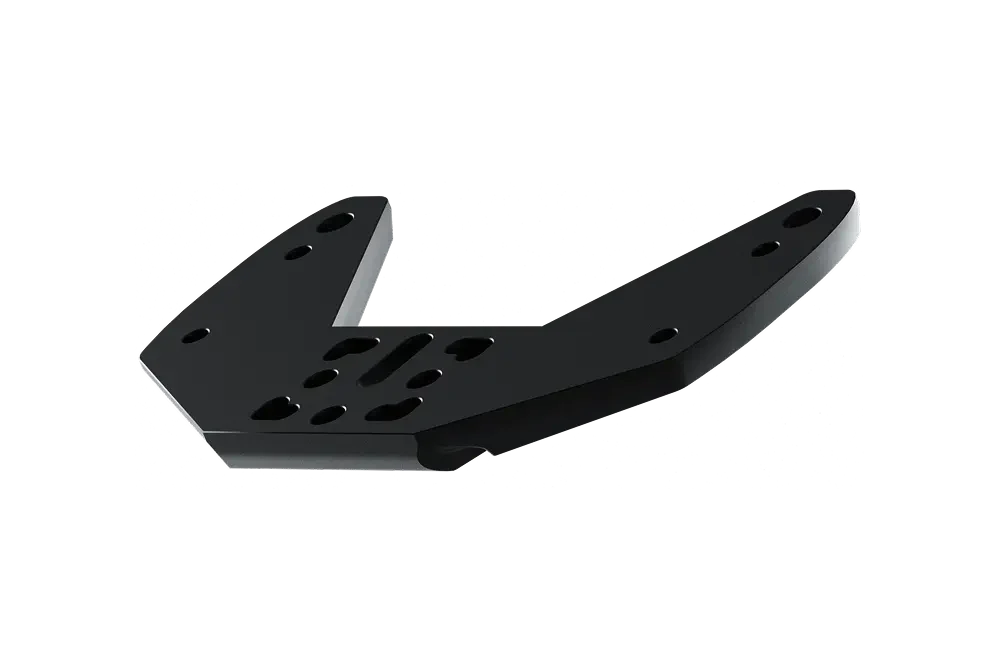
This is also where accurate data placement matters. A computer should be visible with a small eye movement, not a full lift of the head. The Garmin/Wahoo Holder is designed to integrate the display into our front-end system so pacing information stays inside the riding position rather than pulling you out of it.
With 20 km left on the bike, assess breathing, leg tension and hydration. If all three are controlled, you can allow effort to rise slightly while keeping cadence and posture smooth. If the shoulders are already tight or power is becoming erratic, do not force the number. Protect the run. The final bike lap should confirm that you paced well, not compensate for an impatient start.
A flat 80 km course rewards the athlete who can remain aero without fighting the bike. At TETSUO, we would start with measurable contact points before changing hardware. Record pad width, reach, stack, extension angle and wrist position. Our triathlon aerobar measurements guide gives a repeatable way to capture those numbers before race travel.
Masamune is our most integrated option for athletes who want to build the cockpit around long-course support, wrist-angle adjustment and modular accessories. Its unidirectional carbon monocoque body is paired with removable ARAI foam, adjustable hand position and compatibility hardware designed around repeatable setup. For Lusail, the main advantage is not a single specification. It is the ability to build the arm support, hand position, hydration and data around one coherent front end.
Do not install a new system during race week. If you are changing to Masamune, give yourself enough long rides to validate pressure, steering and bottle access. Travel can also move components, so record your measurements and photograph the setup before packing the bike.
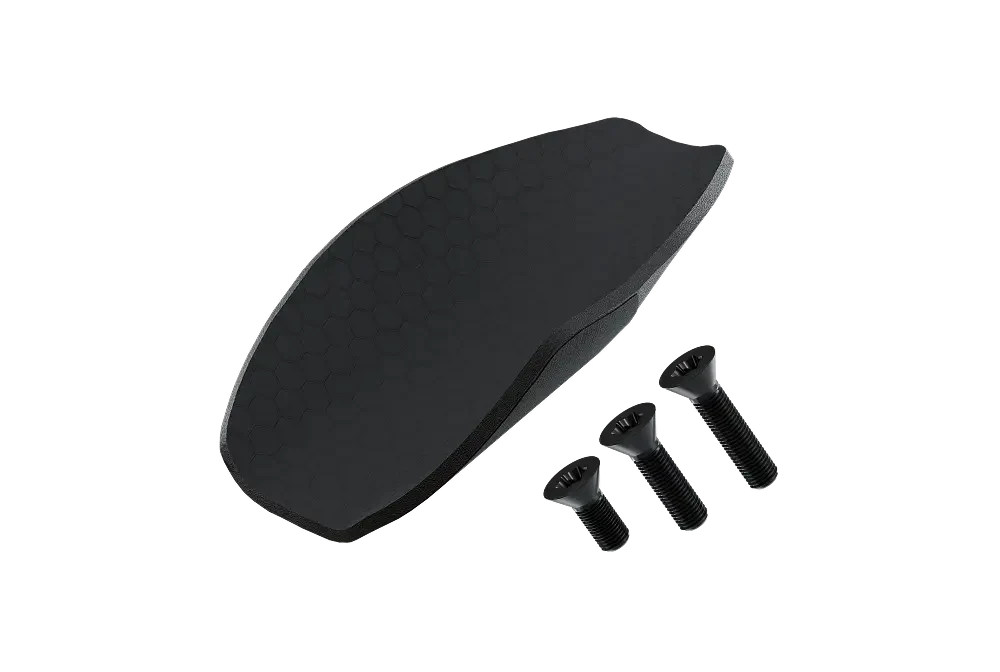
TAO X3 is the simpler route when the priority is better arm support and adjustability without rebuilding the complete front end. The carbon armrests use removable foam and can work with K Wedges for additional angle options. For an athlete already happy with extensions and controls, that can be enough to improve support and make the aero posture easier to hold.
The decision between systems should come from the fit problem. If your hands, hydration and computer need to be reorganised together, the more integrated route makes sense. If the main issue is elbow support and tilt, a smaller change can be more efficient.
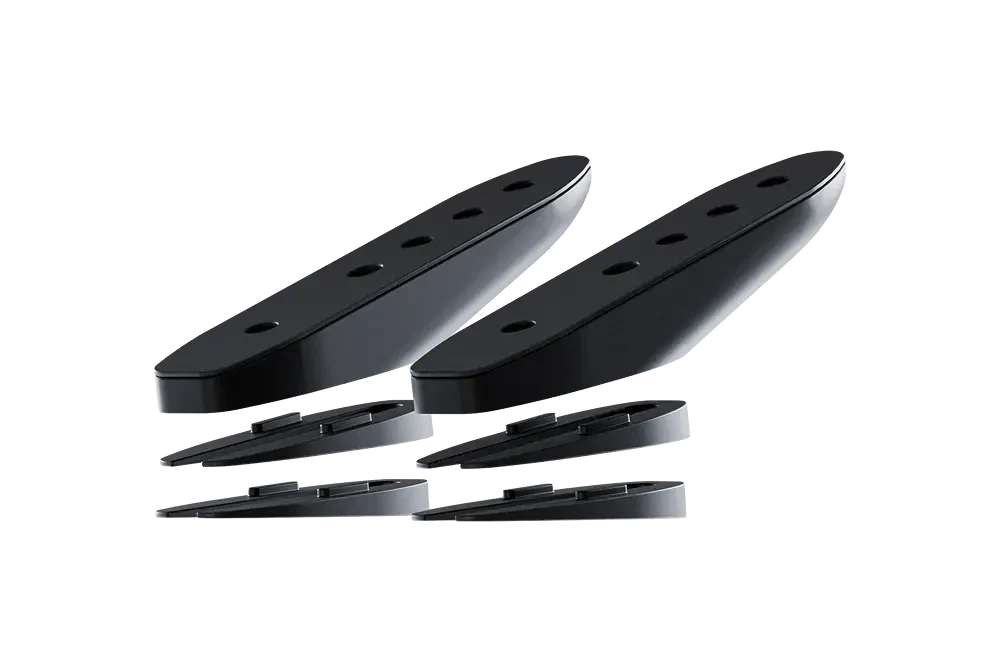
K Wedges provide controlled 10°, 15° and 20° options within our system and can add reach where required. That makes them useful when you need a measured change in forearm angle rather than an improvised spacer stack. On a fast, flat course, the target is a hand and wrist position that feels natural enough to maintain when fatigue rises.
Change one variable at a time. If you alter tilt, width and reach together, you will not know what improved the position. Our aerobar installation guide follows the same logic: start with compatibility, establish a baseline, mount the structure correctly and only then refine fit.
The best bottle position is the one you can use without lifting your torso. The adjustable Bottle holder gives you control over bottle angle, while the Bottle holder + Bottle holder bar is designed for one to three bottles when more front-end capacity is required. The correct choice depends on your fuelling plan, not on how many bottles can physically fit.
Practise the complete movement on the road. Remove the bottle, drink, return it and settle back onto both pads without changing line. Repeat the test late in a long ride. A bottle that is easy to use when fresh can become awkward after two hours if the shoulders are already loaded.
The same principle applies to the computer. Show only the fields that change decisions. For many athletes that means power, lap time, heart rate and perhaps cadence. Extra screens create extra head movement. Lusail is a course for disciplined repetition, so the front end should make the right behaviour easy.
The event is centred in Lusail, north of central Doha. Qatar's Red Line metro runs from Hamad International Airport through central Doha to Lusail, and the Lusail Tram connects with the metro at Lusail and Legtaifiya stations. This can simplify spectator and athlete movement, although carrying a bike case or fully assembled bike may still make a taxi or dedicated transfer more practical.
Arrive early enough to rebuild the bike and ride it before race day. A short spin should confirm brake alignment, shifting, pad symmetry, extension position, bottle retention and computer visibility. If you changed anything during travel, use the same measured baseline you trained with rather than making a new fit decision in the hotel.
For a comparable city-based T100 preparation process, our London T100 2026 guide covers the same core idea of combining race logistics with a stable aero setup. Our Vancouver T100 2026 guide goes deeper into maintaining aero control as conditions and course character change.
| When | What to check | Why it matters |
|---|---|---|
| 7 days out | Confirm pad width, reach, stack and tilt | Locks the position before travel |
| 6 days out | Inspect bolts, pads and mounting interfaces | Finds wear before packing |
| 5 days out | Test bottle removal and return at race effort | Confirms hydration access |
| 4 days out | Photograph and measure the cockpit | Makes travel rebuild repeatable |
| 3 days out | Rebuild bike and check torque after arrival | Restores the known setup |
| 2 days out | Short outdoor ride with shifting and braking | Validates control under load |
| 1 day out | Final bottle, computer and nutrition check | Prevents last-minute changes |
Once the cockpit is correct, stop tuning. Race week is for confirmation, not experimentation. The best setup is the one you have already proved during long aero efforts, race-pace intervals and repeated bottle use.
The official T100 event weekend is scheduled for 10 to 12 December 2026 in Lusail. The professional final is currently listed for Friday 11 December, while the 100 km open race and T100 Age-Group World Championships are listed for Saturday 12 December.
The full distance is 100 km: a 2 km sea swim, an 80 km bike and an 18 km run. The current course information lists one swim lap, four 20 km bike laps and three 6 km run laps.
Yes. The official participant information currently describes both the bike and run as flat. That makes sustained aerodynamics, pacing and stable hydration access especially important.
You can qualify by finishing in the top 10 of your specific age group and gender at a T100 mass-participation race or through your National Federation selection process. T100 qualifiers also need National Federation endorsement, and there is no roll down if a qualified athlete does not take the place.
Yes. The weekend includes an open-entry 100 km triathlon as well as the qualification-only T100 Age-Group World Championships. A sprint triathlon is also listed for Friday 11 December.
The event page lists air temperatures from 15°C to 25°C and average water temperatures from 23.5°C to 26°C. Treat those as planning ranges, not a race-day forecast, and check the final weather and water measurement close to the event.
Prioritise a position you can hold for most of a flat 80 km bike leg, with stable forearm support, relaxed wrists, easy bottle access and a computer position that does not force large head movements. Use measured changes and validate them outdoors before travelling.

GETTING YOU FASTER
Configure your Masamune