


How to race Challenge Peguera Mallorca 2026 with a stable cockpit


Challenge Peguera Mallorca 2026 takes place on 17 October on the west coast of Mallorca, combining a 1.9 km swim, a 90 km bike leg and a 21.1 km run. The course demands controlled pacing, confident handling and an aero position that remains natural when the road rises, turns and accelerates toward the coast.
At Tetsuo, we read this race through the cockpit. The opening part of each bike lap includes winding roads and repeated gradient changes, while the coastal return rewards a position that protects speed without wasting energy. The aim is not the lowest possible front end. It is stable support, neutral wrists, accessible hydration and repeatable control.
| Detail | Official race information |
|---|---|
| Date | Saturday 17 October 2026 |
| Location | Peguera, Mallorca, Spain |
| Format | Middle distance triathlon |
| Swim | 1.9 km, two 950 m laps at Torà Beach |
| Bike | 90 km, two 45 km laps with approximately 500 m of climbing per lap |
| Run | 21.1 km, four laps through Peguera and the seafront |
| Race start | 09:00 |
| Race closure | 18:10 |
The event programme runs from Thursday 15 October to Sunday 18 October. Registration, transition access and official briefings take place before race morning. Check the final athlete guide because wave details and operational instructions may change.
The 1.9 km swim is divided into two laps of approximately 950 m. Athletes leave the water after the first lap, cross the beach and re-enter for the second. That interruption changes the rhythm compared with a single continuous loop. It can raise heart rate, break breathing patterns and tempt athletes to sprint back into the water.
Use the first lap to establish clear water and a sustainable stroke. Stay controlled during the beach section and prepare for the second entry rather than sprinting. Because transition is close to the beach, rehearse wetsuit removal, helmet organisation and a calm first minute on the bike.

The 90 km bike leg consists of two 45 km laps. The opening section heads through the inland part of the municipality, where winding roads and short climbs create repeated changes in speed. The official course description estimates approximately 500 m of elevation gain per lap. That is enough to punish athletes who chase every rise above their planned intensity.
The coastal return includes quicker roads through El Toro, Santa Ponça and Costa de la Calma. After climbing and cornering, the athlete who can settle back onto the pads without shoulder tension gains more than the athlete who only looks aero on a smooth training road.
The second lap repeats the same questions under fatigue. Can you drink while holding a line, move cleanly between hand positions and find the pads again after a corner. Those are cockpit questions as much as fitness questions.

The run begins with a short connection from transition before four main laps through the boulevard and Palmira promenade. The surface changes between asphalt, pedestrian concrete and non-slip tiles. It is a lively course with frequent support, but the compact layout can distort effort because other athletes may be on different laps.
Use your own pace and lap count. The first circuit should feel controlled even when the crowd encourages speed. Hold form through turns, take nutrition early and use repeated landmarks to divide the half marathon into manageable blocks.

On a flat, uninterrupted course, an athlete may remain static for long periods. Peguera requires more movement. You will rise for gradients, brake for technical sections, change grip and then return to aero. The position must be easy to find again. If the pads provide incomplete forearm support or the extensions force the wrists into tension, each return costs concentration and upper-body energy.
A sustainable position keeps the shoulders quiet, the hands relaxed and breathing stable at race power. A lower front end is not faster if it closes the hip angle, limits vision or forces repeated sitting up. The best setup preserves useful aerodynamics across the whole 90 km.
At Tetsuo, we prioritise repeatability. Measure pad stack, reach, width and extension angle, then test them on roads with corners and short climbs. A trainer-only position does not reproduce this course.
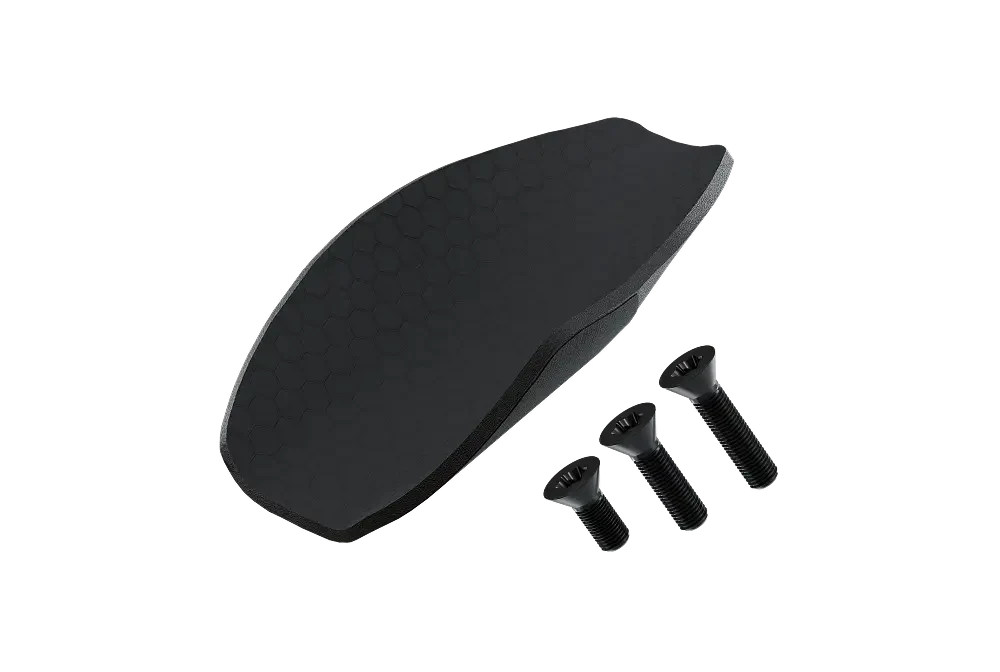
Pad contact determines how stable the upper body feels. Support should extend beyond the point of the elbow so pressure spreads through the forearm. When the contact area is too small, athletes compensate by gripping harder and loading the shoulders. That tension makes steering less precise and increases the urge to sit up.
Check pad width outdoors. A narrow stance only works when breathing, vision and handling remain calm. On winding roads, slightly wider support may create more usable speed because steering comes from stable forearms rather than tense hands.
Reach should let the shoulders stay down rather than stretched into a plank. If the extensions sit too far forward, the athlete slides toward the nose of the saddle, overloads the hands and struggles to return to the pads after braking. If reach is too short, the torso feels compressed and the elbows may interfere with the knees.
Establish a neutral baseline, then use tilt to align the wrist rather than conceal excessive reach. Our guide on how to adjust aerobar position separates pad contact, reach, stack, width and extension angle through single-variable testing.
Wrist tension usually appears gradually. The hands begin relaxed, then the athlete bends the wrists, squeezes the grips and lifts the shoulders as fatigue grows. A controlled extension angle lets the hands rest rather than brace. This improves comfort, but it also improves steering because small inputs remain clean.
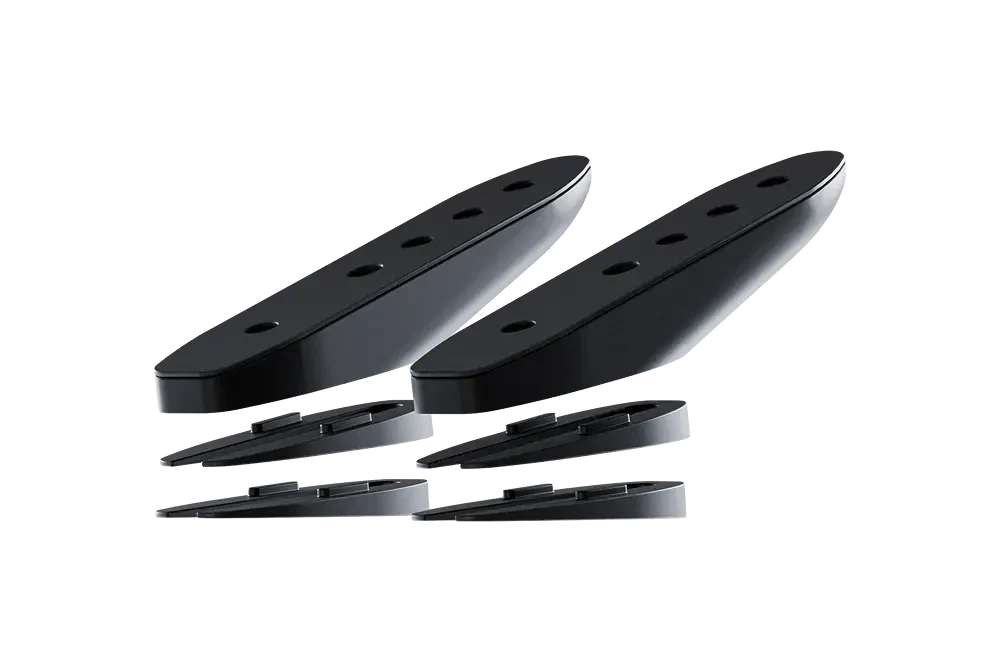
K Wedges provide repeatable 10, 15 and 20 degree options within our system. Test the smallest change that improves alignment and confirm that braking, shifting and hydration remain easy.
Drinking should not require a large shoulder movement or a complete change in posture. A bottle placed between the arms can reduce disruption when its angle follows the natural path of the hand. Our adjustable bottle holder is designed to let athletes tune that access rather than accept one fixed orientation.
The same principle applies to the bike computer. Place the display where essential data is visible with a small eye movement. The Garmin and Wahoo holder integrates data into the front end. Our aerobar hydration guide covers the complete access process.

The first lap should feel more restrained than the atmosphere suggests. Use the inland climbs to maintain controlled pressure rather than a fixed speed. Let pace fall on steeper pitches and recover smoothly over the top. Accelerating hard after every bend creates repeated spikes that consume carbohydrate and load the legs before the second lap.
On descents and faster coastal sections, speed should come from position and line choice. Settle onto the pads only when visibility and road conditions allow it. Look through corners, brake before the turn and avoid forcing aero where control should take priority. The objective is to preserve momentum without creating unnecessary risk.
Use the start of lap two as a full systems check. Assess breathing, shoulder tension, hand comfort, fluid intake and effort. If any element is drifting, correct it before returning inland. A small reduction in intensity can restore the position and protect the run. Trying to save a target average speed at all costs usually creates a larger loss later.
Use a tested race range rather than another athlete's percentage. Whether you pace by power, heart rate or perceived effort, keep the pattern smooth enough that the final coastal kilometres still feel organised.
The official course places bike aid stations at approximately kilometres 9, 39, 52 and 82. That pattern gives athletes two opportunities per lap, but the gaps are not identical. Plan what you will carry from the start and what you intend to collect. Do not rely on deciding at the station while moving through other riders.
Practise taking a bottle, securing it and returning to the extensions without drifting. If a station is crowded, slow enough to complete the exchange cleanly. A missed bottle creates a larger problem than a few seconds of caution.
The run course provides frequent water and nutrition access. Use it for smaller, regular amounts rather than overloading the stomach. Test the same concentration, volume and timing during training.
Hydration needs vary by temperature, body size and sweat rate. Build the plan from long sessions and suitable professional guidance. The cockpit should make execution easier, not define the plan.
| Day | Main athlete actions |
|---|---|
| Thursday 15 October | Registration and expo open from 15:00 to 20:00 |
| Friday 16 October | Registration and expo from 10:00 to 20:00, transition access from 16:00 to 21:00 |
| Saturday 17 October | Swim warm-up from 08:00, race start at 09:00, awards at 19:00 |
| Sunday 18 October | Junior aquathlon and final event activities |
Peguera is around 30 km from Palma airport. Give yourself enough time to collect the bike, reach the accommodation and rebuild the cockpit without pressure. Arriving early also creates space for a short shakeout ride, registration and transition preparation.
Use the first outdoor ride to verify brakes, gears, wheel security, bottle retention, data visibility and pad feel. Include controlled braking in every hand position and stop if the front end moves or produces unfamiliar noise.
The timetable includes intermediate cut-offs as well as the final closure. Know them before race morning and treat the latest athlete information as the reference.
Travel turns a good fit into a measurement problem. Before packing, photograph the cockpit from the front and side. Record pad width, pad reach, extension exposure, bottle angle and computer position. Add discreet reference marks where appropriate. These records help you restore the position instead of relying on memory.
Use the correct assembly sequence and a calibrated torque wrench. Our assembly guide covers Masamune with and without a plate. Recheck every fastener after the first local ride.
Resolve compatibility before race week. Our compatibility guide lists mounting ranges and tightening values. The Masamune configurator helps identify mounting, tilt and accessory options.
Do not introduce a major position change after arriving. A new angle can affect breathing, saddle pressure and handling. Race week is for reproducing a validated setup, not discovering a more aggressive one.
Fast roads still require decisions. Athletes who over-accelerate after each technical section often create a high metabolic cost for a small time gain. Build speed progressively, return to aero smoothly and let the position reduce drag. Do not chase a number that forces poor lines or late braking.
Middle distance is long enough for a small pressure point to become a major movement pattern. Worn foam, incomplete forearm contact or a grip angle that loads the wrist can push the athlete out of aero repeatedly. Resolve contact quality during training rather than accepting discomfort as part of racing.
The second bike lap is not a copy of the first because the athlete arrives with fatigue, less fluid and more muscular load. Train the second half of long rides with race-position blocks, controlled climbs and deliberate bottle access. The goal is to make the final hour look mechanically similar to the first.
Late hardware changes create uncertainty. Bolts need rechecking, fit needs validation and accessories need rough-road testing. Complete the build early enough to ride it in wind, on climbs and through technical turns. Confidence comes from repetition, not from how clean a cockpit looks in transition.
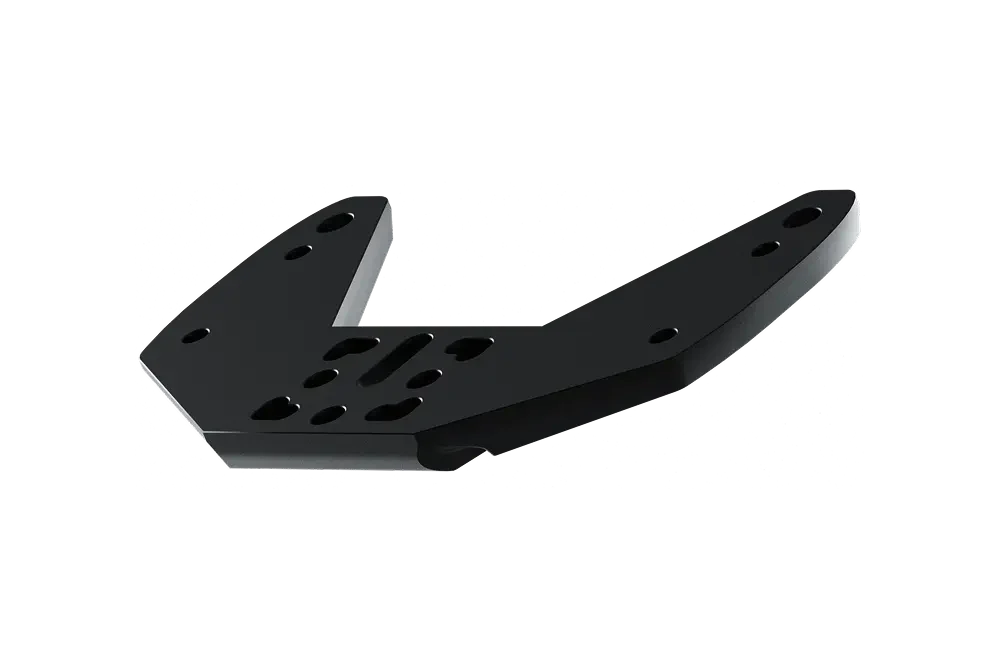
At Tetsuo, we offer two main routes for forearm support. Masamune is the complete monocoque carbon system for athletes who want extensive control over support, wrist angle and integrated accessories. TAO X3 offers a simpler carbon support platform with adjustable angle and support distance for athletes who prioritise a direct, comfort-led build.
| Need | Recommended route | Reason for Peguera |
|---|---|---|
| Full cockpit integration | Masamune | Supports controlled fit changes, stable forearm contact and accessory integration |
| Simpler carbon support | TAO X3 | Provides an ergonomic base for a repeatable middle-distance position |
| More hand elevation | K Wedges | Creates measured tilt options for wrist alignment and relaxed grip |
| Accessible front hydration | Adjustable bottle holder | Helps align bottle access with the natural hand path |
| Visible race data | Computer holder | Keeps essential information within the cockpit without a large posture change |
Confirm compatibility, elbow spacing and angle before ordering, then test the complete system on similar roads. Compare our Challenge Almere Amsterdam and Challenge Roth guides to see how terrain changes cockpit priorities. Peguera combines sustained aero opportunities with more frequent handling demands.
Training should teach the body and cockpit to perform together. In the first four weeks, establish a stable position through endurance rides with repeated aero blocks. Review shoulder tension, wrist comfort and head stability, then change only one fit variable at a time.
During the middle four weeks, add rolling terrain, descents and repeated transitions back to aero. Practise drinking on safe straight sections and add brick sessions after realistic time in position.
In the final four weeks, complete longer race-power blocks with the planned nutrition schedule. Rehearse the first bike minutes, the start of lap two and the approach to transition. Make the last meaningful cockpit adjustment early enough to validate it.
Taper week should reduce fatigue while preserving familiarity. Use short aero intervals, check every mounting point and photograph measurements before packing. After rebuilding the bike, compare the setup with those references and complete a calm outdoor check.
The main middle-distance race is scheduled for Saturday 17 October 2026, with a 09:00 start. Event activities begin on Thursday 15 October and continue through Sunday 18 October.
The format includes a 1.9 km swim, a 90 km bike leg and a 21.1 km run. The swim has two laps, the bike has two laps and the run uses four main circuits after the connection from transition.
It is a technical and demanding middle-distance course rather than a purely flat speed course. Each 45 km lap combines winding inland roads, short climbs and faster coastal sections, with approximately 500 m of elevation gain per lap according to the organiser.
The swim takes place at Torà Beach in Peguera. Athletes complete two laps of approximately 950 m, including a beach exit and re-entry between laps.
Wetsuit use is determined under the applicable federation rules from the measured water temperature before the start. Athletes should follow the final briefing and official race communication for the decision on race morning.
Prioritise complete forearm support, relaxed wrist alignment, easy transitions between hand positions and stable hydration access. The setup should remain controllable on winding roads and easy to re-enter on fast sections. Confirm compatibility and torque values before travelling, then reproduce the same measured position after rebuilding the bike.

GETTING YOU FASTER
Configure your Masamune