


Racing the Ironman Mallorca: course, strategy and logistics


Ironman Mallorca is one of the most iconic early-season middle-distance races in Europe. The setting is spectacular, the atmosphere is international and the course forces you to stay honest from the first meters of the swim to the final kilometers of the run. If you are planning to race in Alcudia, this guide brings together the practical details that matter most: how the course behaves, what weather to expect in May, how to pace the day and what equipment choices can make a real difference.
The full experience goes beyond race day. Mallorca is one of the best triathlon destinations in Europe, which means you can arrive early, train on great roads and turn the trip into a proper race week instead of a rushed airport-hotel-transition routine. That said, the event rewards athletes who keep things simple. Good pacing, clean logistics and a stable cockpit usually matter more than heroic decisions.
The event is built around the classic 70.3 format: 1.9 km swim, 90 km bike and 21.1 km run. The race base is in Alcudia, in the north of Mallorca, with the beach and seafront giving the event a compact and very spectator-friendly feel. What makes this race special is the balance between accessibility and challenge. The logistics are comfortable, but the bike course has enough elevation and enough changes in rhythm to punish poor decisions.
| Segment | Distance | Format | Main challenge |
|---|---|---|---|
| Swim | 1.9 km | Sea swim | Cool water and positioning at the start |
| Bike | 90 km | 1 loop | Elevation, rhythm changes and wind |
| Run | 21.1 km | 3 loops | Steady pacing and thermal management |
The race is traditionally held in early May. In the 2026 calendar it appears on Saturday, May 9. The venue is Alcudia, in the north of Mallorca, with the operational center around the beach and port area. The most practical airport is Palma de Mallorca (PMI), around 50 to 60 km away depending on the route, and most car transfers take roughly 45 to 60 minutes.
From PMI you have several options: rental car if you want full freedom during race week, private transfer if you are traveling with a bike bag and want the simplest solution, and bus if you are staying in Alcudia and do not need to move bulky equipment every day. If your plan includes training rides before the race, a car is usually worth it for both time savings and flexibility.
The swim is 1.9 km in the sea, inside Alcudia Bay. Because it is a relatively protected bay, the waves are usually manageable, although there can still be some swell or light current depending on the wind. The start is from the beach, with an opening section that can become crowded because of the number of athletes.
Practical keys: warm up your shoulders and neck well if the water feels cool, find feet in the first 300 meters and do not obsess over the perfect line if the field is busy. In this kind of start, giving away 10 seconds to avoid contact is often a smart trade.

The bike course is 90 km in a single loop and is considered demanding without being extreme. There is an initial flatter section to settle in, a central part with climbs that sort the field and a faster final section where the wind can influence speed. The typical feeling is that this is a course where you need to stay switched on, because it alternates periods of steady power with repeated rhythm changes when entering and exiting villages and corners.
If you push too hard on the climbing sections, you usually pay for it on the run. On the other hand, if you manage power well on the hills and hold a stable position on the faster roads, the course tends to give time back in the final kilometers.

The run is made up of three loops over 21.1 km, very flat, across promenade sections and bridges with views over the bay. The lap format is ideal for racing by feel, because every pass through the same point gives you clear references on pace, hydration and muscular tolerance.
In May the temperature usually allows for a sustained effort, but the direction changes along the course can alternate between sunny sections and stretches with breeze. If you overdo the first 5 km, the cost usually shows up on the final loop.

The defining factor of Ironman Mallorca is the cool water. In May, sea temperature in Alcudia often sits around 17 to 19 °C on average, with some variation. On land, May conditions in the Balearic Islands typically move around an average monthly temperature near 18 to 20 °C, with days that can feel very pleasant and others with wind or occasional rain.
What this means in practice is simple: the swim can leave you slightly stiff if you do not warm up properly and the first hour on the bike can feel cool enough to make you overdress. The goal is to avoid sweating too much early on and paying for it later on the run.
| Variable | Typical range | How it affects you |
|---|---|---|
| Water | 17 to 19 °C | Wetsuit almost always, watch the chill when exiting |
| Air temperature | 18 to 25 °C | Good for running, but the feel changes with the wind |
| Wind | Moderate and variable | Can punish the return on the bike and affect stability |
| Rain | Possible, not constant | Slippery tarmac on turns and roundabouts |
The overall strategy in Alcudia is straightforward: get out of the water without overpaying, ride a controlled bike leg based on power and start the half marathon with room to build. The run course, because of its profile, rewards the athlete who stays calm, not the one who goes looking for an early statement.
Nutrition and hydration matter more through consistency than heroics in a 70.3. If your gut tolerates it, aim for a steady carbohydrate intake on the bike and stay on top of both fluids and sodium. On the run, keep it simple: gels at clear points and drink at every aid station. What you have not trained, you do not improvise on the red carpet.
The same mistakes appear again and again: trying to make time in the swim with heart rate too high, going above your limit on the climbs to pass athletes you will later see again on the run, and forgetting to eat in the final 20 km of the bike because transition already feels close.
In the swim, aim for an effort you could repeat in a set. If you come out feeling controlled, T1 becomes faster and the opening phase of the bike goes better. On the bike, define a clear ceiling for the climbs and respect it, even when stronger riders come past. The sum of small excesses is what empties your legs by kilometer 15 of the run.
In the half marathon, the first loop should feel almost easy. If your breathing is already too high, you are above your sustainable point. The second loop is where you consolidate and the third is where you decide whether you can squeeze without breaking. The lap-based course lets you make small pace adjustments without falling into abrupt changes.
On a course with fast sections and variable wind, aerodynamics are not an aesthetic obsession. They are a way to protect your watts. A stable position reduces the muscular cost of holding the bike and lets you eat and drink without leaving the aero position.
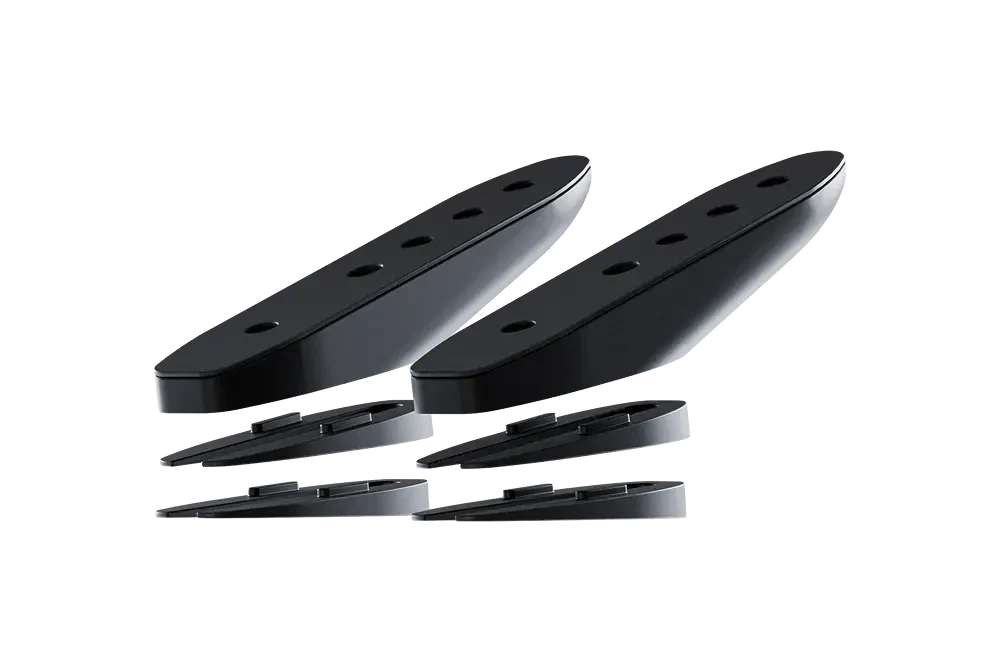
The priority is balance between performance and comfort. If your forearm support is not solid, tension will build in your shoulders and neck and it will be harder to maintain power. Adjust height and angle so your back can work without collapsing your breathing. If you need to raise the support slightly to stay comfortable for longer, do it and gain real minutes across the day.
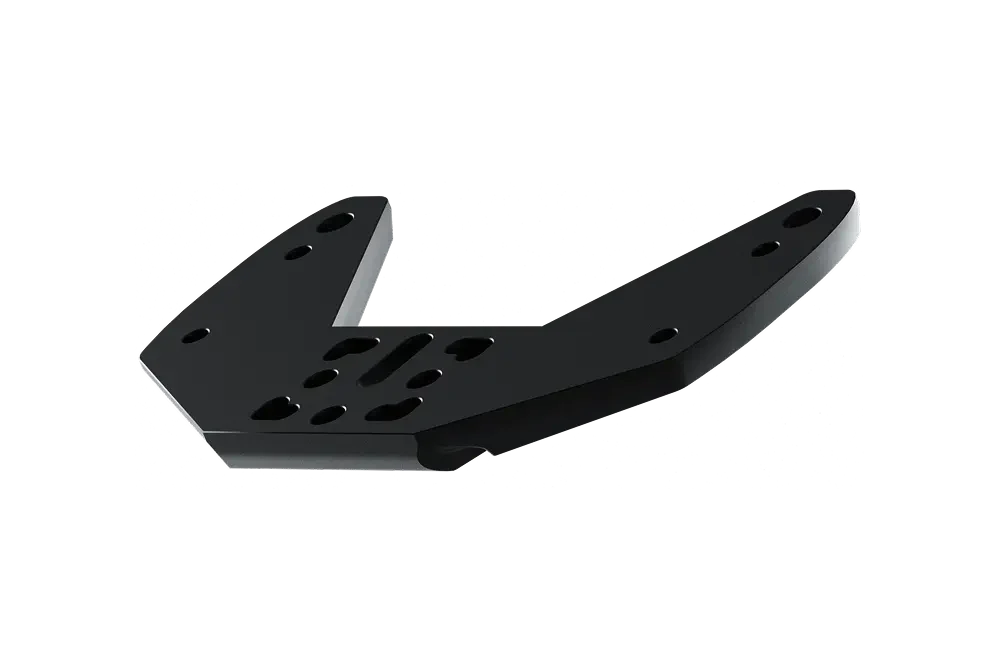
For a long-distance focused setup, you can look at the Masamune system and its hydration and GPS accessories, designed to keep the cockpit clean and functional in racing conditions. If your bike needs adaptation, Tetsuo also offers specific plates such as Plate Canyon Speedmax Disc or Plate Orbea, as well as tilt adjustment through K Wedges.
The ideal bike for Alcudia is the one that lets you hold an aero position without fighting the front end. If you are riding a triathlon bike, prioritize stability and access to nutrition. If you are racing on a road bike, clip-on aerobars and a well-fitted position can still be enough to perform very well on this course.
Wheels: a mid-depth setup is often a good balance if the wind shows up. Helmet: choose the one you can actually tolerate without overheating, because May is not usually extreme, but poor ventilation can still cost you from kilometer 12 of the run onwards. Hydration: the less you move to drink, the better. If you want a modular solution, take a look at the Bottle holder with adjustable angle and the screw kit to mount the system securely.
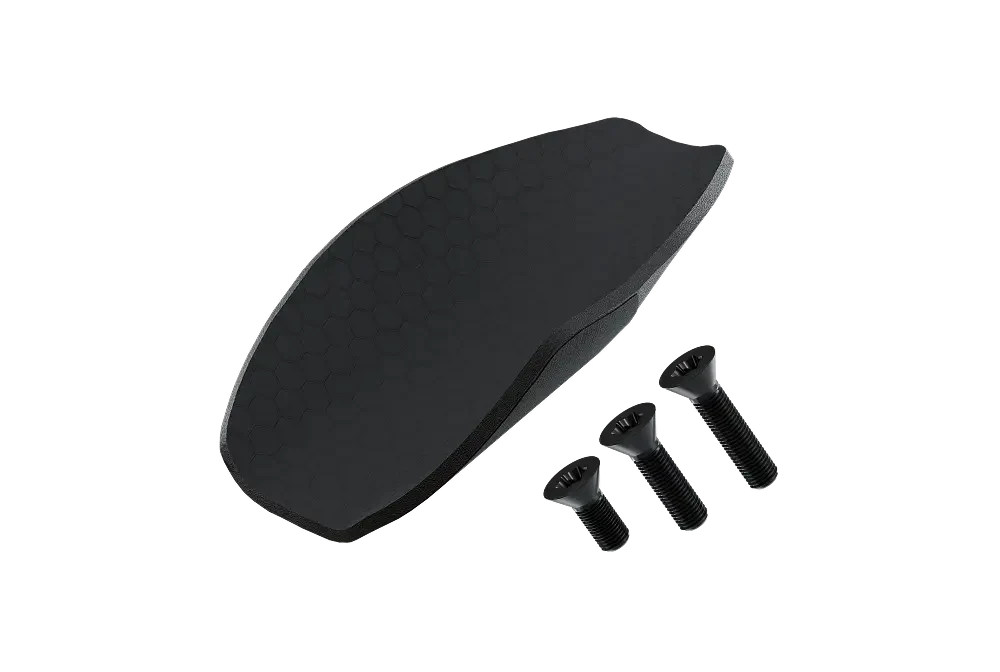
If you are looking for an extension solution compatible with many setups, TAO is an option designed around ergonomics and low weight. To personalize the hand contact, you can add the Mono grip.
| Segment | Essential | Useful extra |
|---|---|---|
| Swim | Wetsuit, goggles, cap | Spare goggles, anti-chafing balm |
| Bike | Puncture kit, CO2, nutrition | Aero bottle holder, GPS mount, spare screws |
| Run | Shoes, cap, gels | Spare socks, salt capsules |
To minimize stress, the most practical choice is to stay close to the Alcudia seafront or in Port d'Alcudia, because you can walk to the swim start, transition and finish line. If you are traveling with family, Playa de Muro also works very well, with quieter accommodation and quick access by bike or car.
Look for a place with early breakfast or the option to prepare it in the room, enough space to store the bike and easy parking. If you want to train during the week before the race, it is also useful to stay close to the Ma-13 road so you can get out towards the interior quickly without crossing too much urban traffic.

Carbohydrate loading works best when you choose simple and repeatable meals. In the days before the race, prioritize rice, pasta, potatoes and bread and reduce experiments with heavy sauces or fried food. On race morning, the important thing is to eat exactly what you have practiced: easy carbohydrates, some protein if you tolerate it and fluids in a controlled way.
After the finish line, your priority is to rehydrate, recover sodium and begin taking in carbohydrates together with some protein. In Alcudia and Port d'Alcudia you will find enough options for a proper recovery meal without much hassle, but the most effective approach is often to have something ready at your accommodation so you do not depend on queues.
Mallorca is a paradise for bike preparation. If you arrive with a few days to spare, do at least one ride with some elevation so you can confirm your gearing choice and make sure your aero position is sustainable. For running, the Alcudia and Playa de Muro promenades offer long and flat sections that are ideal for easy mileage. For swimming, a short early-morning session in the bay helps you normalize the water temperature and test your goggles in dawn light.
If you want to fine-tune the cockpit, it can also help to review in-house articles such as common mistakes when adjusting aerobars for an Ironman cockpit or the 2026 aerobars guide.

On the key day, the goal is to simplify everything. If you are staying nearby, walk to transition with enough time. If you depend on a car, check access roads and parking in advance, because road closures change the usual traffic flow. Have a plan B ready as well: one drop-off point for equipment and one alternative parking option within a 10 to 15 minute walk.
Inside transition, avoid too many loose accessories. The cleaner and more repeatable your setup is, the less room there is for mistakes. If you use a GPS mount or integrated hydration, check the screws and tightening the day before, not at the last minute.
To travel without surprises, split your luggage into three blocks: racing, mechanics and recovery. Racing includes wetsuit, bib number, helmet, shoes and nutrition. Mechanics includes pump, adapters, multitool, brake pads if needed and small spares such as screws. Recovery includes dry clothes, flip-flops, sunscreen and a light extra layer for after the swim if the morning starts cool.
If you are racing Ironman Mallorca with an aero setup, add a dedicated cockpit check: extension tightness, pad position, lever alignment and a drinking test without moving around too much. That stability in the cockpit is one of the best forms of insurance for your pacing plan.
Alcudia offers easy options for accompanying family and friends without needing major transfers: a walk through the old town, beach time, short rides towards viewpoints and relaxed time around the port area. On race day itself, the three-loop run format makes it much easier for supporters to see the athlete several times with very little effort.
The atmosphere feels like a major international race, with a large expo and a strong presence of clubs. Because it sits early in the season for many athletes, the field mixes very strong competitors with athletes aiming to complete their first 70.3. That combination makes the day intense: there is real speed at the front and plenty of support out on the run course.
If you have raced in Spain before, it can help to compare sensations with other guides from the blog such as IRONMAN 70.3 Valencia or IRONMAN 70.3 Marbella, especially to understand how the weather and bike course character change from one venue to another.
The first typical mistake is dressing too heavily for the bike. If you come out of the water cold, it is tempting to add too much. The problem is that by kilometer 20 you are already sweating, drinking less and moving away from your plan. Thin gloves or arm warmers can make sense if you need them, but the real priority is avoiding overheating.
The second mistake is ego-based pacing on the climbs. A 70.3 is not won at kilometer 40 of the bike, but it can definitely be lost there. Hold your ceiling and think about total time, not the one-on-one battle in front of you.
The third is eating too late. If you realize at kilometer 60 that you are behind on carbohydrates, you are already late. Program regular intakes from the start and repeat what you have trained.
Because of the logistics and the run course, it is usually a very good option for a first 70.3. Everything is centralized, the environment is used to triathlon and the run segment is very manageable. The parts that deserve respect are the bike, because of elevation and concentration demands, and the swim if you do not feel comfortable in cool water.
If you are preparing for your first Ironman Mallorca, the best indicator is your ability to sustain bike power without compromising the run. If you can complete sessions such as 3 by 20 minutes at controlled effort and then run afterwards with stable form, you are moving in the right direction.
If you are traveling to Alcudia, it is a good opportunity to see long-distance cockpit solutions up close and solve compatibility or setup questions. You can explore key products beforehand such as Masamune and K Wedges so you arrive with a clear idea of what your bike really needs.
In May it is common for the sea to sit below 19 °C, so racing in a wetsuit is usually the norm if the regulations allow it.
No. It is a 90 km single-loop bike with elevation and repeated rhythm changes, plus fast sections at the end where the wind can influence the day.
Yes. The three-loop format makes it easy to see the athlete several times from nearby points without needing major moves.
Conservative bike pacing, regular nutrition and a stable cockpit that lets you hold the aero position without accumulating tension in the shoulders and neck.

GETTING YOU FASTER
Configure your Masamune