


How to Race the Qatar T100 World Championship Final 2026 in Lusail


The Qatar T100 World Championship Final 2026 brings the T100 season to Lusail from 10 to 12 December. The 100 km format combines a 2 km sea swim, an 80 km flat bike leg and an 18 km flat run. The defining challenge is sustained control on a fast city course where unnecessary movement can interrupt rhythm.
At TETSUO, we would prepare for Lusail as a complete system. Position, hydration, data visibility and front-end stability should work together. A fast cockpit lets you stay calm on the pads, keep the wrists neutral, drink without sitting up and return to race pace quickly after each interruption.
| Race detail | Confirmed information |
|---|---|
| Event dates | 10 to 12 December 2026 |
| Location | Lusail, Qatar |
| Start area | Lusail Ferry Dock |
| Event village and expo | Lusail Plaza |
| Women’s professional final | Friday 11 December, start time TBC |
| Men’s professional final | Saturday 12 December, start time TBC |
| 100 km open race | Saturday 12 December |
| T100 Age-Group World Championship | Saturday 12 December |
| Distance | 2 km swim, 80 km bike, 18 km run |
| Bike terrain | Flat |
| Run terrain | Flat |
| Average water temperature | 23.5°C to 26°C |
| Event air temperature range | 15°C to 25°C |
The official event information currently confirms the race days above while several operational times remain to be announced. Athletes should therefore treat any detailed timetable as provisional until the final athlete guide is released. The safest reference close to race week is the official Qatar T100 event information.
The official profile is flat for both bike and run, which turns consistency into a performance variable. There is no major climb to create a natural reset. An athlete who repeatedly sits up, over-accelerates or chases speed can spend more energy without creating a meaningful advantage.
Aerodynamic sustainability matters more than a static position. We judge a setup by how quietly it can be held at race power. If the shoulders stay low, the hands remain relaxed and the head settles without forcing the neck, the front end is doing its job.

The full-distance swim is one 2 km sea lap from the Lusail waterfront. A single-lap swim rewards clean navigation because there is no second circuit to correct a poor line. The opening minutes should be controlled enough to establish breathing, find clear water and settle into a stroke rate that can be sustained without carrying unnecessary fatigue into the bike.
The event lists average water temperatures between 23.5°C and 26°C. That is useful for preparation but it is not a wetsuit guarantee. Equipment rules depend on the measured race-day temperature, so prepare to swim efficiently with or without extra buoyancy.
The bike leg is 80 km split across four 20 km laps. That structure makes pacing simple to understand and easy to get wrong. The first lap can feel deceptively quick while the field is still dense and adrenaline is high. The middle laps reward repetition. The final lap is where a well-paced athlete can increase pressure without destroying the run.
Flat does not mean effortless. Wind direction, road exposure and repeated accelerations out of turns can change the cost of each lap. Use speed as feedback, not as the target. Power, heart rate, breathing and perceived effort should remain the primary controls you established in training.
For a course like this, the most valuable front-end skill is returning to the aero position quickly. After a turn, bottle grab or short rise in effort, settle back onto the pads without a long adjustment sequence. If you need to search for the correct elbow position every time, your setup is not yet repeatable.
The run covers 18 km over three 6 km laps. A flat run gives very little forced recovery, so the opening pace deserves restraint. The first lap should establish cadence and cooling. The second lap is where you protect the rhythm you planned. The third is where you decide whether the pace can rise.
The major risk is overbiking because the cycling course feels fast. A strong bike split is only useful if the final 18 km remains runnable at the effort you trained for. The cleanest strategy is to leave transition feeling that the first running kilometre is almost too conservative, then let pace build as breathing and leg tension stabilise.
The event runs across three days. Thursday 10 December is scheduled around the community 5 km and 1 km run. Friday 11 December includes the sprint triathlon and the women’s professional final. Saturday 12 December brings the T100 Age-Group World Championship, the open 100 km triathlon and the men’s professional final.
Relay entries are also available for 2026 across the 100 km and sprint formats. That expands the weekend beyond the championship fields and gives athletes another way to experience the course. For the open 100 km race, the minimum age is 18 by 31 December 2026. For the sprint, the listed minimum age is 16.
The T100 Age-Group World Championship is qualification-only. The current rules state that athletes can qualify by finishing in the top 10 of their specific age group and gender at a T100 mass-participation event or through their National Federation selection process. Athletes who qualify through a T100 result still need National Federation endorsement before the entry is finalised.
A national race suit is required for the championship race. Athletes who cannot meet that requirement are directed to the open 100 km event instead. Complete federation approval, uniform requirements and race documents early.
If you have not qualified, the open 100 km triathlon uses the same 2 km, 80 km and 18 km format. The championship and open races have different entry pathways even though the physical challenge is closely aligned.
The Qatar finale carries extra weight in the professional championship. Under the 2026 format, each athlete’s best three T100 race scores plus the Qatar final count toward the season title, with increased points available at the finale.
For spectators, the split programme is useful. The women’s professional final is scheduled for Friday and the men’s professional final for Saturday. Start times are still listed as TBC, so anyone planning the weekend around the pro races should confirm the final schedule closer to December.
Use the opening 20 km to stabilise. Settle breathing after the swim, confirm that the cockpit feels symmetrical and begin hydration early. Do not chase riders based on speed alone. A fast surface can make an effort above target feel cheap for ten minutes and expensive thirty minutes later.
If your shoulders start to rise or your hands become tense, fix posture before chasing watts. Small upper-body tension can turn into a large problem when repeated across four laps.
The middle 40 km should look almost boring. Same breathing. Same bottle routine. Same head position. Same return to the pads after each interruption. Smoothness protects the run because it removes unnecessary surges and keeps the aerodynamic shape consistent.
Your computer should support that discipline. The Garmin/Wahoo Holder keeps key information integrated into the front end, reducing the need for large head movements. Show the fields that affect decisions rather than filling every screen. Power, lap time, heart rate and cadence are enough for many athletes.
With 20 km to ride, check three things: breathing, leg tension and hydration. If all three are controlled, a gradual increase can make sense. If the shoulders are already tight or the power trace is becoming erratic, hold the line and protect the run. The last lap should reward the first three, not repair them.
For the Qatar T100 World Championship Final 2026, we would prioritise repeatability over an extreme fit. Start by recording pad width, reach, stack, extension angle and wrist position. Our triathlon aerobar measurements guide explains how to document those contact points so the position can be rebuilt after travel.
Then refine one variable at a time. The process in our aerobar position guide starts with pad contact, then reach, stack, width and extension angle. That sequence matters. When you change everything together, you lose the ability to identify what improved comfort or stability.
Masamune is our most integrated route for athletes who want the arm support, hand position, accessories and fit hardware to work as one system. The body is built from 100% unidirectional carbon monocoque and uses removable ARAI foam. The current specification includes adjustable wrist angle, 0 to 30 mm of reach extension and K Wedge options for defined tilt changes.
For a flat 80 km course, that adjustability is useful because comfort and aerodynamics cannot be separated. If your wrists fight the extensions or the forearms slide on the pads, you will move. Every movement changes the shape you are presenting to the air.
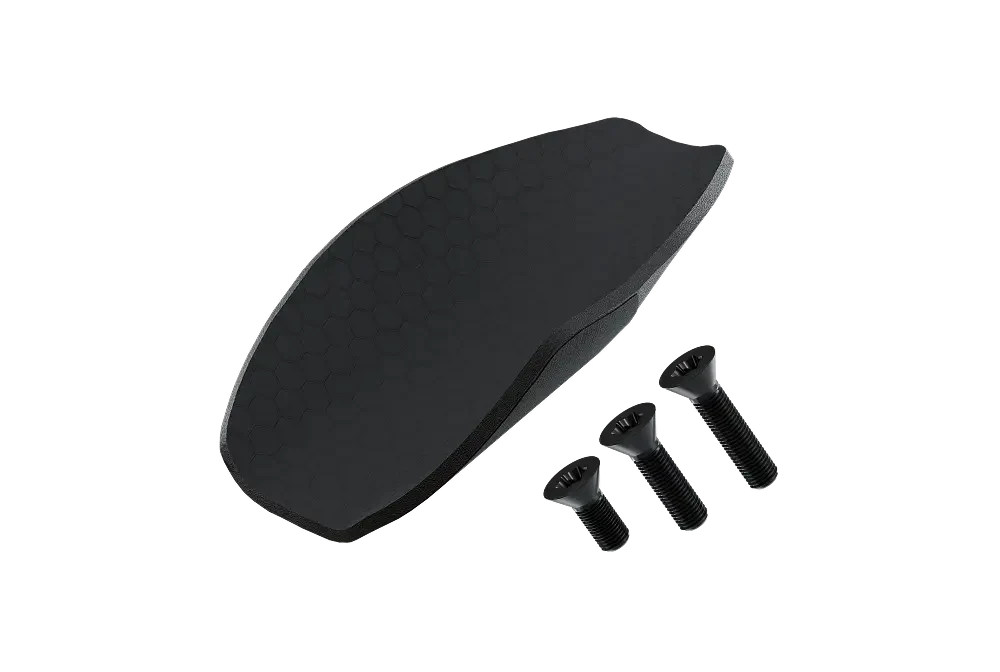
TAO X3 is the simpler option when the main objective is improving forearm support and adjustability without rebuilding the entire front end. Its two carbon armrests use removable foam and can be combined with K Wedges for controlled angle changes.
The choice between the two systems should come from the fit problem. If you need to organise hand position, hydration and computer placement together, the integrated route gives more control. If your existing extensions work well and the problem is mainly elbow support, pad position or tilt, a focused armrest change may be enough.
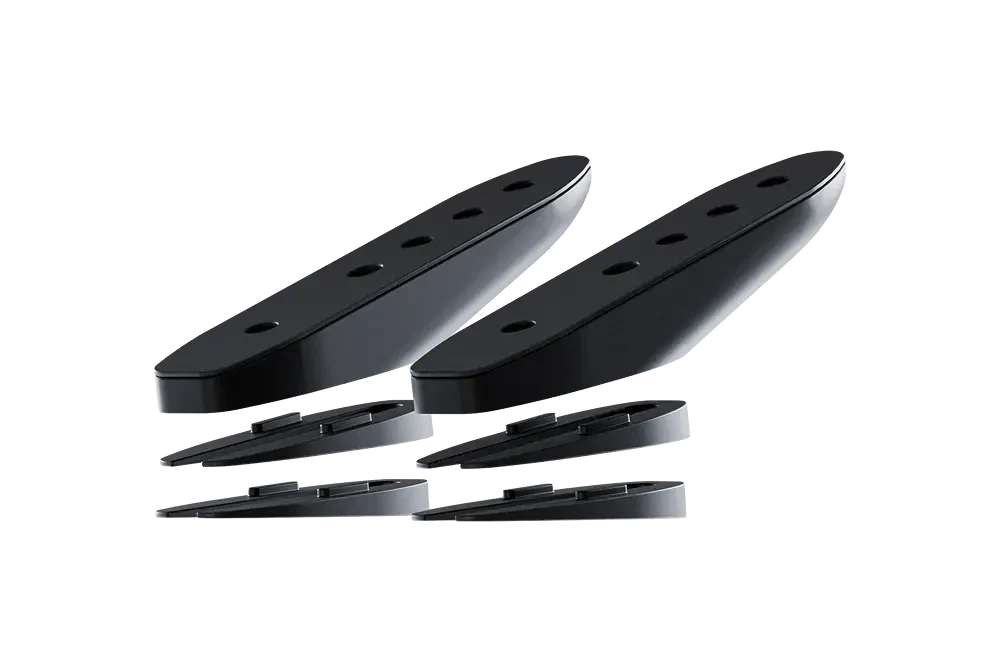
K Wedges provide 10°, 15° and 20° tilt options within our system. Their role is not to make the front end look more aggressive. It is to help the forearm and wrist settle into a position that remains natural under load.
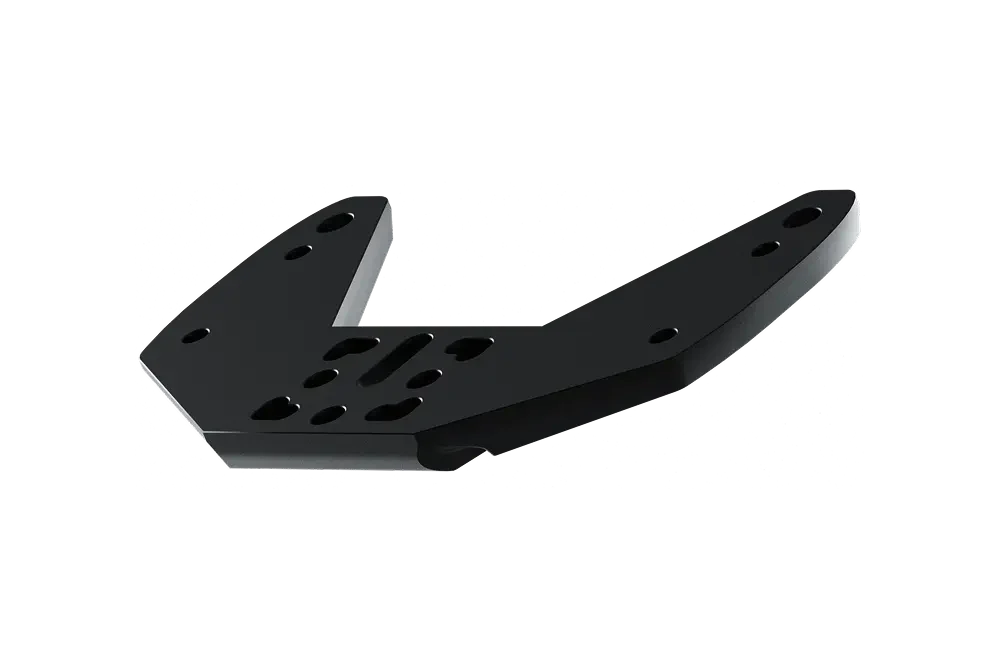
Before ordering any cockpit part, use our Compatibility Guide. Masamune currently supports Dual Stack spacing from 117 mm to 169 mm, while central-stack bikes require the corresponding plate. TAO is designed for compatible Dual Stack mounting and is not listed for Central Stack systems. Once compatibility is confirmed, follow the Assembly Guide and use the recommended 4 to 7 Nm tightening range shown for our systems.
The right hydration setup is the one you can use without lifting the torso. On a fast course, a bottle that is technically aerodynamic but awkward to reach can cost more than it saves because every drink becomes a posture change.
Our Bottle holder adjusts around the natural hand path. For more front-end capacity, the Bottle holder + Bottle holder bar supports one to three bottles within the TETSUO cockpit ecosystem.
Test access before race week. Practise removing the bottle, drinking and returning it while maintaining a straight line, then repeat the movement late in a long ride. Our aerobar hydration guide goes deeper into bottle position, reach and posture.
A useful race-specific session is four 20-minute aero blocks at planned 100 km effort with short recoveries. Add two controlled accelerations inside each block and return immediately to the target position. The skill is recovering posture and breathing without turning the session into repeated surges.
Another useful session is a long ride with the exact race cockpit, bottle arrangement and computer screen. Use the same hand position and practise the same drinking frequency you plan to use in Qatar. Finish with a short run so you can judge whether upper-body fatigue from the bike is affecting posture or stride.
If the neck, shoulders or hands become the limiting factor before the legs, treat that as fit feedback and revisit pad support, reach and tilt.

Before packing, photograph the cockpit from the side and front. Record pad width, reach and wedge configuration so the fit can be rebuilt after travel.
After arrival, rebuild the bike against the recorded baseline. Check brakes, shifting, pad symmetry, extensions, bottle retention and computer visibility, then use the correct assembly sequence and torque specifications.
Complete a short outdoor ride before race day. Ride in aero, brake, shift and drink to confirm that nothing moves under load. Our triathlon aerobars maintenance guide covers bolts, contact points, foams and mounting interfaces.
| When | Front-end check | Purpose |
|---|---|---|
| 7 days out | Record pad width, reach, stack and tilt | Lock the known fit before travel |
| 5 days out | Test bottle access at race effort | Confirm hydration does not change posture |
| 4 days out | Inspect bolts, foams and mounting points | Find wear before packing |
| After arrival | Rebuild and compare measurements | Restore the training position |
| 2 days out | Short outdoor validation ride | Check control, shifting, braking and hydration |
| 1 day out | Final bottle and computer check | Avoid last-minute changes |
The event is based in Lusail, with the start at Lusail Ferry Dock and the expo, race pack collection and event village at Lusail Plaza. Hamad International Airport in Doha is the main arrival airport.
Arrive early enough to rebuild the bike and complete one validation ride. Race pack collection times are still TBC, so keep the official event page bookmarked and avoid building travel plans around provisional times.
The Qatar T100 World Championship Final 2026 sits late in the season, which also means equipment has already accumulated months of training, sweat, transport and torque cycles. Inspect rather than assume. Replace worn foam or damaged hardware early enough to complete several rides before departure.
The event runs from 10 to 12 December 2026 in Lusail, Qatar. The women’s professional final is scheduled for Friday 11 December and the men’s professional final for Saturday 12 December. Pro start times are still TBC.
The full T100 distance is 100 km: a 2 km sea swim, an 80 km bike and an 18 km run. The official course information lists one swim lap, four 20 km bike laps and three 6 km run laps.
Yes. The official event information describes both the bike and run courses as flat. That makes sustained aerodynamics, smooth pacing and reliable hydration access especially important.
Yes. The weekend includes an open 100 km triathlon as well as the qualification-only T100 Age-Group World Championship. The open race uses the same 2 km, 80 km and 18 km distance format.
The current rules state that athletes can qualify by finishing in the top 10 of their age group and gender at a T100 mass-participation event or through their National Federation selection process. T100 qualifiers still need National Federation endorsement.
The event page lists average water temperatures from 23.5°C to 26°C and an event air temperature range from 15°C to 25°C. These are planning ranges rather than a race-day forecast.
Prioritise a position you can hold for most of the flat 80 km bike leg. Stable forearm support, relaxed wrists, controlled reach, easy bottle access and a readable computer position are more valuable than an extreme setup that repeatedly forces you upright.

A DAR-LHE MAIS VELOCIDADE
Configure o seu Masamune