


How to race Challenge Almere Amsterdam 2026


Challenge Almere Amsterdam 2026 is one of the most important long-course triathlon dates in Europe for athletes who want a fast, technical and honest race. The event is scheduled for 12 September 2026 in Almere, Netherlands, with long distance and middle distance racing on flat, open terrain where pacing discipline, fuelling precision and cockpit stability can make a measurable difference.
At Tetsuo, we look at a race like Almere from the bike split first, not because the swim and run matter less, but because the 180 km ride rewards athletes who can hold an efficient position without fighting the bike. Below sea level, exposed to wind and built around sustained speed, this is the kind of course where comfort and aerodynamics need to work together from the first kilometre.
The 2026 edition is scheduled as a major long-distance triathlon weekend in Almere. The long distance race includes a 3.8 km swim, 180 km bike and 42.2 km run. The middle distance race is also scheduled for the same date, with a 1.9 km swim, 94 km bike and 21.1 km run. The event also carries extra importance because Almere is set to host the European Championship Long Distance as part of its 45th anniversary edition.
Almere is not a mountain race, a technical descent race or a survival race. It is a speed management race. The course profile gives strong athletes the chance to stay aero for long periods, but it also exposes poor bike fit quickly. A position that feels fast for 30 minutes can become expensive after three hours if shoulder pressure, hand angle, bottle access or neck tension start to break the rhythm.

| Race detail | Key information |
|---|---|
| Main race date | 12 September 2026 |
| Location | Almere, Netherlands |
| Long distance | 3.8 km swim, 180 km bike, 42.2 km run |
| Middle distance | 1.9 km swim, 94 km bike, 21.1 km run |
| Course identity | Flat, open, fast and exposed to wind |
| Best bike focus | Sustainable aero position, stable steering, fuelling access |
Flat courses look simple on paper. In reality, they remove natural recovery points. There are fewer climbs to stand up, fewer descents to coast and fewer changes in cadence to reset the body. On a long, open course, the athlete creates the variation. That means pacing caps, micro-adjustments and a cockpit that allows controlled changes without leaving the aero position for too long.
The race takes place through the open landscape around Almere and the Flevoland polder. That profile is ideal for speed, but it also means wind can become one of the main performance variables. Headwind sections demand patience. Tailwind sections tempt athletes to over-ride. Crosswind sections punish tense shoulders and narrow steering control. The fastest athletes will not simply push harder. They will stay smoother for longer.

The long distance swim is 3.8 km. The goal is not to win the race in the water. The goal is to exit with a stable heart rate, calm breathing and enough freshness to settle quickly onto the bike. Cold water, race density and early adrenaline can make the first minutes feel sharper than expected. Athletes should rehearse the first 400 metres of effort in training, not just total distance.
For middle distance athletes, the 1.9 km swim still matters because the following 94 km bike leg is long enough to punish an aggressive start. A good swim in Almere is a clean swim. Position well, avoid unnecessary contact, sight with rhythm and leave the water ready to ride.
The 180 km long distance bike leg is where Challenge Almere Amsterdam 2026 becomes a technical race. Flat does not mean passive. It means the power line is visible, the wind is constant and the athlete has fewer excuses to leave position. The course is built for athletes who can produce steady power while staying narrow, relaxed and fuelled.
For this profile, cockpit setup should solve three problems at once. First, it should reduce frontal area without closing breathing. Second, it should support the forearms so the upper body can stay quiet. Third, it should keep hydration and the computer within reach. A fast setup is not just a low setup. A fast setup is the one you can hold when fatigue, wind and nutrition all demand attention.
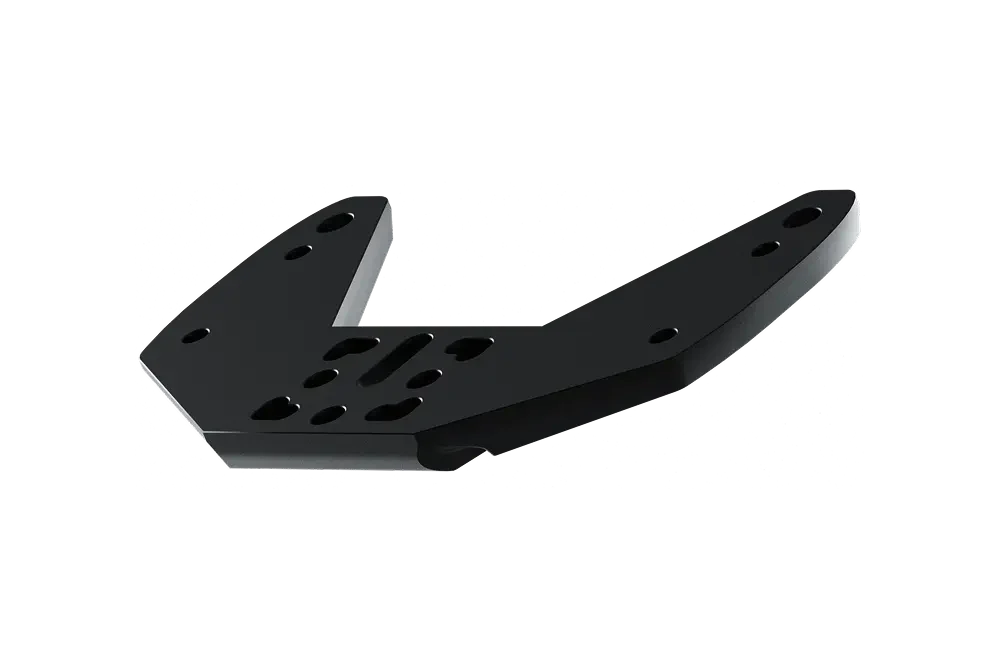
Our Masamune carbon cockpit is the route for athletes seeking maximum aerodynamic structure, wrist angle control and long-distance stability. For athletes refining their position or building a more adaptable front end, TAO X3 gives a practical adjustment platform. In both cases, the goal is the same: make the aero position repeatable under race pressure.
The marathon in Almere can be fast, but only if the bike leg has been controlled. A flat ride can create a false sense of economy because speed stays high even when muscular load is increasing. The damage often appears later, when the first 10 km of the run feel heavier than planned. Athletes should judge the bike by how well they can run afterwards, not only by the bike split.
A good marathon strategy starts before the first stride. Hip angle, shoulder tension and fuelling consistency on the bike all influence running mechanics. If the cockpit forces the athlete to brace, overreach or sit up too often, that cost can appear as tight hip flexors, an unstable core or delayed nutrition on the run.

For Challenge Almere Amsterdam 2026, the cockpit should be built around durability of position. The most aggressive angle is not automatically the fastest. The correct position is the one that combines low drag, relaxed breathing, safe steering and easy access to fluids. If one of those elements fails, the athlete starts paying for the setup every few minutes.
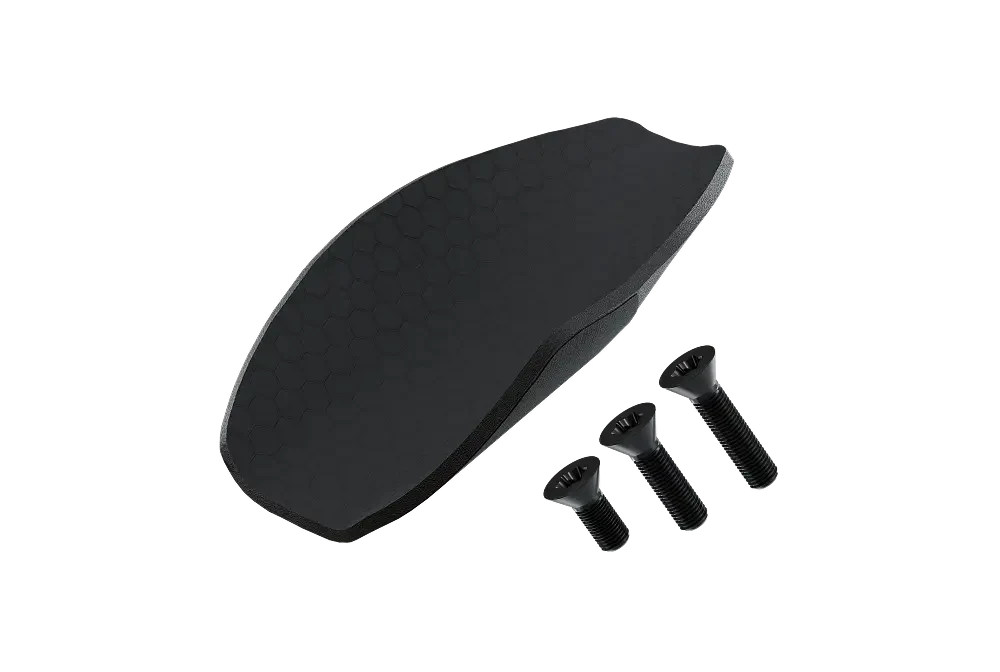
Forearm support matters because flat races create long periods of constant pressure. Pads that are too narrow can make steering unstable in crosswinds. Pads that are too wide can increase frontal area. The right width lets the shoulders stay quiet while the hands control the front end naturally. We recommend testing this outside, not only on the indoor trainer, because wind changes everything.
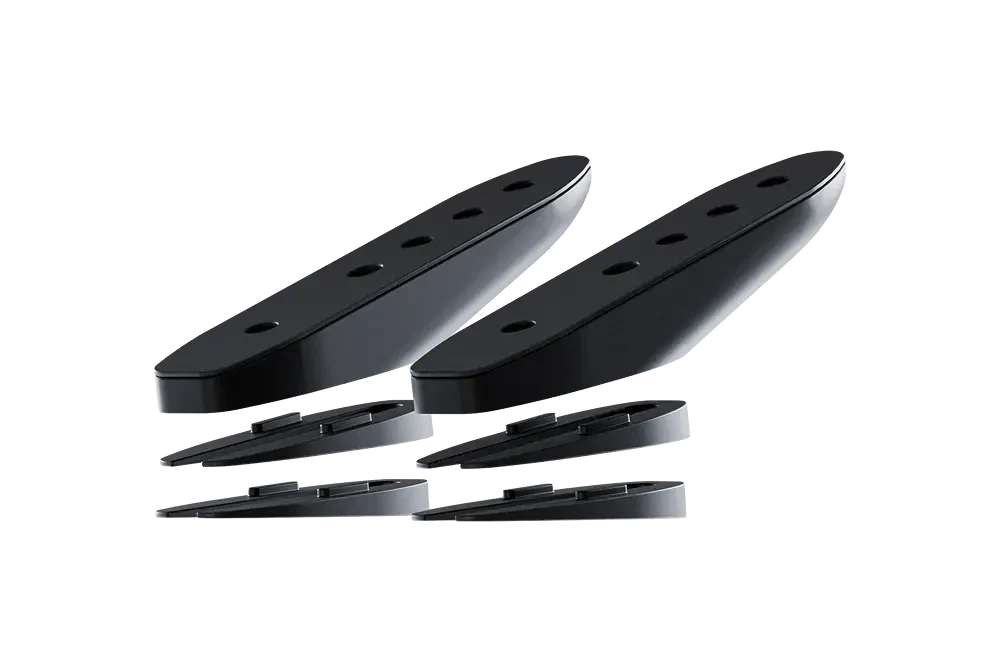
Small changes in tilt can have a large effect on comfort. A modest upward angle can help support the forearms, reduce wrist strain and keep the head position more stable. Our K Wedges allow athletes to work with 10, 15 or 20 degree options, which is useful when the objective is not just getting lower, but finding a position that remains strong after several hours.
Reach should be long enough to avoid feeling cramped, but not so long that the athlete loses control of the front end. If the shoulders slide forward, the neck tightens or the hands feel overloaded, the cockpit is asking too much from the body. This is where incremental adjustment matters more than dramatic changes.
In Almere, nutrition errors can be subtle. A flat bike leg can make athletes delay drinking because the riding feels smooth. That is a mistake. Bottle placement should make drinking almost automatic. Our adjustable bottle holder helps place hydration where the athlete can reach it without breaking position, while the Garmin and Wahoo holder keeps race data visible without forcing head movement.
Power, heart rate and lap targets should be easy to read in the aero position. If checking the computer requires lifting the head too often, the setup is costing attention and airflow. On a course where the body may stay tucked for long sections, visibility is part of performance.
The best Almere bike split is usually built through restraint. The first hour should feel controlled, especially if the wind is favourable. Athletes often make mistakes with tailwind speed because the number on the screen feels rewarding. The better target is sustainable power, steady cadence and relaxed shoulders.
In headwind sections, the objective is not to force the same speed. The objective is to keep the aerodynamic shape and avoid surges. Overpowering into wind creates a double cost: more energy spent and more muscular fatigue before the marathon. A stable cockpit helps because the athlete can stay narrow instead of sitting up every time the wind increases.
For the middle distance race, the same logic applies over 94 km. The event is shorter, but it is not short enough to ignore efficiency. Athletes can ride with more intensity than in the long distance race, but the best performance still comes from smooth power and a position that does not compromise the half marathon.
The official time schedule gives athletes a useful framework for logistics. On race week, registration, bike check-in, test swim windows and briefings need to be planned before nutrition and rest. Long-course athletes should avoid turning Friday into a full day on their feet.
| Timing | Planning focus |
|---|---|
| Thursday and Friday | Registration, bike check-in, test swim and final gear checks |
| Saturday early morning | Transition access, bottles, computer, tyre pressure and nutrition |
| Long distance starts | Elite, age-group, open, relay and aquabike waves are scheduled in the morning |
| Middle distance start | Rolling start scheduled later in the morning |
| Afternoon and evening | First finishers, awards, finish line atmosphere and last finishers |
Athletes should always use the final athlete guide as the operational source for exact timings. The practical rule is simple: reduce decisions before race morning. Bottles should be pre-planned, tools should be packed, computer screens should be set and cockpit bolts should be checked before the final night.
Almere is close enough to Amsterdam to make travel practical, but athletes should not treat it like a casual city trip. Staying near the race area can reduce stress during bike check-in and race morning. Accommodation availability can tighten around major race weekends, so early booking is part of performance preparation.
International athletes should plan bike transport with enough time to rebuild, test and recheck the front end. Any cockpit disassembly for travel should be photographed before packing. Mark pad position, reach, spacer order and bottle holder angle. A fast setup can lose its value if it is rebuilt by memory under pressure.

Flat courses can be mentally and physically relentless. There is nowhere to hide from pacing errors. Athletes should train long steady blocks in position, not only total bike volume. The key question is not whether you can ride 180 km. The key question is whether you can ride efficiently and still run.
Last-minute position changes are risky before Challenge Almere Amsterdam 2026. A new tilt, pad width or reach may feel good for one short ride, but the body needs time to adapt. We recommend testing changes early enough to include long rides, race-power intervals and brick sessions.
Before choosing any front-end component, athletes should confirm the bike mount standard, hole distance and fit requirements. Our compatibility guide is the safest starting point before building or changing a setup. If the base system is wrong, no race-week adjustment will make it right.
Hydration should not depend on willpower. If drinking requires leaving aero position, athletes will drink less when intensity rises. A bottle should be easy to reach, stable in crosswinds and positioned without blocking the hands. The same applies to gels, salt and any race nutrition stored near the front end.
For athletes racing the full 180 km bike leg, Masamune is the highest-performance option in our range. It is built for long-course athletes who want carbon structure, stable ergonomics and a cockpit designed around aerodynamic efficiency. It makes sense when the position is already serious and the objective is to make it faster, cleaner and more sustainable.
TAO X3 is a strong choice for athletes who need more adjustability while developing their race position. It is especially useful when the athlete is still testing reach, pad support and front-end feel. For middle distance racing, it can also be an efficient upgrade because the 94 km bike leg is long enough for aerodynamics to matter, but short enough that simplicity and fit flexibility remain valuable.
| Setup goal | Recommended Tetsuo route |
|---|---|
| Maximum integrated long-course performance | Masamune |
| Adjustable position development | TAO X3 |
| More supportive forearm angle | K Wedges |
| Easier hydration access | Adjustable bottle holder |
| Clear race data visibility | Garmin and Wahoo holder |
The final build should include long aero blocks, not just long rides. Athletes should gradually extend time in position while monitoring neck comfort, hand pressure, breathing and fuelling. A useful session is steady race power in aero position with planned drinking every 10 to 15 minutes. If the athlete cannot drink without sitting up, the position is not race-ready.
Brick sessions are essential because Almere rewards athletes who protect their run. A technically perfect bike split that damages the marathon is not a good bike split. The final 12 weeks should include controlled bike-to-run workouts where the first run kilometres are deliberately conservative. This trains discipline as much as physiology.
Wind exposure should also be trained. Riding indoors develops power, but it does not teach the athlete how the front end behaves in crosswinds. Outdoor sessions are the only way to know whether pad width, grip angle and steering control feel secure enough for open roads.
The main long distance and middle distance races are scheduled for 12 September 2026 in Almere, Netherlands. Athletes should check the final athlete guide for confirmed wave times, check-in rules and race-week updates.
The long distance race covers 3.8 km of swimming, 180 km of cycling and 42.2 km of running. The middle distance race covers 1.9 km of swimming, 94 km of cycling and 21.1 km of running.
Yes, Almere is known for flat, open and fast racing. The speed potential is high, but the wind and constant pedalling load make pacing and aero comfort very important.
The best cockpit is stable, comfortable and easy to fuel from. For maximum long-course performance, we would start with Masamune. For athletes refining fit or building a flexible setup, TAO X3 is a strong option. K Wedges, bottle holders and computer holders help complete the race-specific system.

A DAR-LHE MAIS VELOCIDADE
Configure o seu Masamune