


How to race IRONMAN Calella Barcelona 2026 faster


IRONMAN Calella Barcelona 2026 takes place on 4 October in Calella, Spain, with a full-distance format built around a sea swim, a fast 180 km bike course and a flat marathon. It is a race that encourages speed, but the biggest gains do not come from forcing the first half of the bike. They come from reducing unnecessary drag, holding a stable position and arriving at the run with enough control to use the fitness you brought to the start line.
At Tetsuo, we look at Calella through the cockpit because this course gives athletes long periods in which position matters. A fast road amplifies every small inefficiency. Raised shoulders, a wrist angle that forces tension, hydration that requires sitting up and pads that become uncomfortable after two hours can all interrupt the rhythm that makes a flat course fast.
This guide uses the information currently confirmed by the organiser. The detailed 2026 Athlete Guide is not yet available, so we do not present provisional schedules, aid-station positions or course details as final. Athletes should use the official race channels for the final maps, check-in instructions, start procedure and race-week updates.
| Race detail | What athletes should know |
|---|---|
| Main race date | 4 October 2026 |
| Location | Calella, Barcelona, Spain |
| Format | 3.8 km swim, 180 km bike and 42.2 km run |
| Course identity | Sea swim, fast bike course and flat run |
| Registration | The 2026 race is sold out |
| Primary bike focus | Sustainable aerodynamics, smooth power and accessible hydration |
| Official updates | IRONMAN Calella-Barcelona event page |
Race day is scheduled for Sunday, 4 October 2026. Calella sits on the Mediterranean coast north of Barcelona and has become closely associated with long-distance triathlon. The race is promoted as a personal-best course and has recorded finishing times below eight hours. That identity attracts athletes who arrive ready to race rather than simply complete the distance.
Fast does not mean easy. On a mountainous course, the terrain tells you when to change power and posture. In Calella, long periods of speed can make the effort feel smoother than it really is. The athlete must create discipline through power limits, nutrition timing and a position that remains usable for the whole ride.

The official race description combines a fast bike course with a flat run. That creates a clear performance opportunity, but it also increases the cost of small errors. There are fewer obvious moments to reset the body, stand up or coast. If the front end is uncomfortable, athletes may spend repeated minutes out of aero without noticing how much time and energy those interruptions consume.
Speed also changes the value of drag. The faster the bike travels, the more important it becomes to keep the rider compact and the airflow clean. That does not mean chasing the lowest possible position. A position only produces value while the athlete can hold it with relaxed shoulders, stable hips, normal breathing and reliable control.
The race begins with a 3.8 km sea swim. Mediterranean conditions can look calm from the beach and still create movement, glare or a different rhythm once the field enters the water. Prepare for salt water, sighting toward low buoys and the pressure of a large full-distance start.
The first objective is to prevent early intensity from defining the whole swim. Build effort gradually, establish breathing and choose a line that matches your ability. A controlled exit matters because the opening kilometres of a fast bike course can encourage another surge before heart rate and breathing have settled.

The bike leg is where Calella creates its strongest performance opportunity. The official description identifies it as fast, which means athletes should expect long periods where an efficient aero position can accumulate time. The course should be approached as a sustained execution problem rather than a sequence of attacks.
Keep the first part of the ride deliberately controlled. Use power, heart rate or perceived effort to stop the speed around you from dictating your pacing. Ride legal distances, avoid reacting to every pass and return to your planned intensity after turns, short changes in gradient or congested sections.
A fast split depends on continuity. Eating should not require a complete posture change. Drinking should not force the shoulders upward. The computer should remain visible without lifting the head excessively. Every part of the cockpit should support the same objective: stay aerodynamic without making the position fragile.

The 42.2 km run is flat, but that is not a guarantee of a fast marathon. It removes climbing as an explanation for slowing down and exposes the cost of over-riding more clearly. Athletes who push above plan during the bike often feel excellent through transition and the opening kilometres before the accumulated load appears.
Use the first part of the run to rebuild posture, cadence and fuelling. A controlled opening pace is especially important on a course with crowds and a strong personal-best atmosphere. The fastest-looking start is rarely the fastest route to the finish.

Early October on the Mediterranean coast can bring warm sun, humidity and changing breeze. Prepare for a range rather than one expected forecast. Train hydration in warm conditions and practise riding in crosswinds, because wind can expose tense shoulders or a cockpit that feels too narrow to control confidently.
Use power or effort to regulate the response. Accept a lower speed into a headwind and avoid fighting every gust. With assistance from the wind, keep pressure controlled and remember that reduced cooling can make hydration easier to forget. The aim is stable output, not an even speed number.
An efficient position reduces frontal area while preserving the athlete’s ability to breathe and produce power. The head, shoulders, forearms, hands and torso should work as one system. Lower is not automatically faster when it causes the shoulders to shrug, the elbows to slide, the hips to rock or the athlete to leave aero repeatedly.
Narrower elbows can reduce frontal area for some athletes, but the change must preserve breathing, shoulder comfort and steering control. Move in small steps and evaluate the whole system. If narrowing the pads creates tension in the upper back or pushes the hands into an unnatural angle, the theoretical gain may disappear.
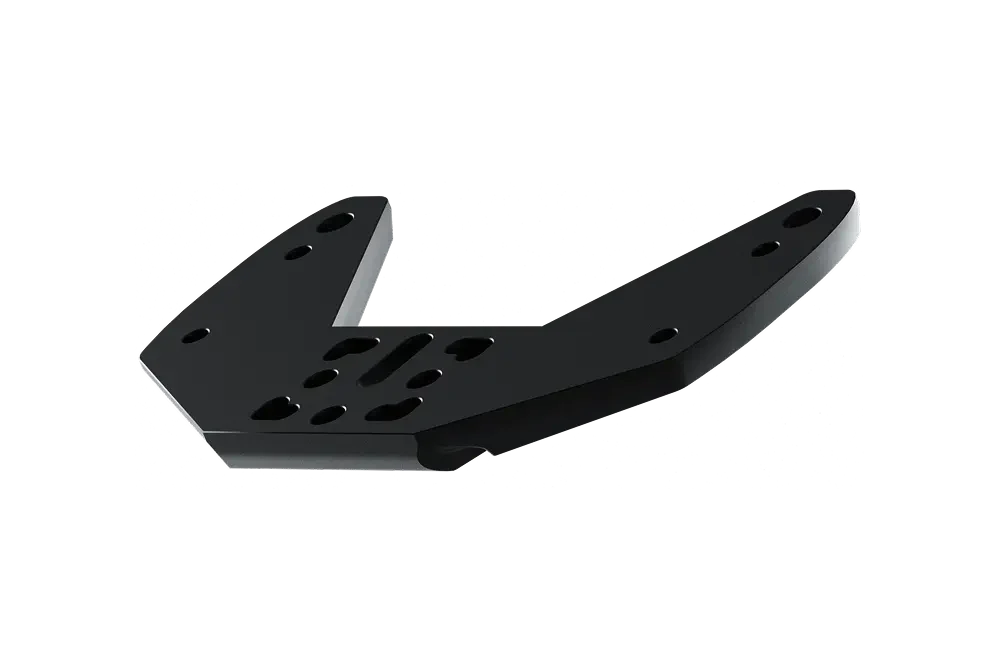
Our Compatibility Guide helps athletes understand the available mounting range and the components required for their cockpit. Check the bike interface before ordering parts or changing the setup.
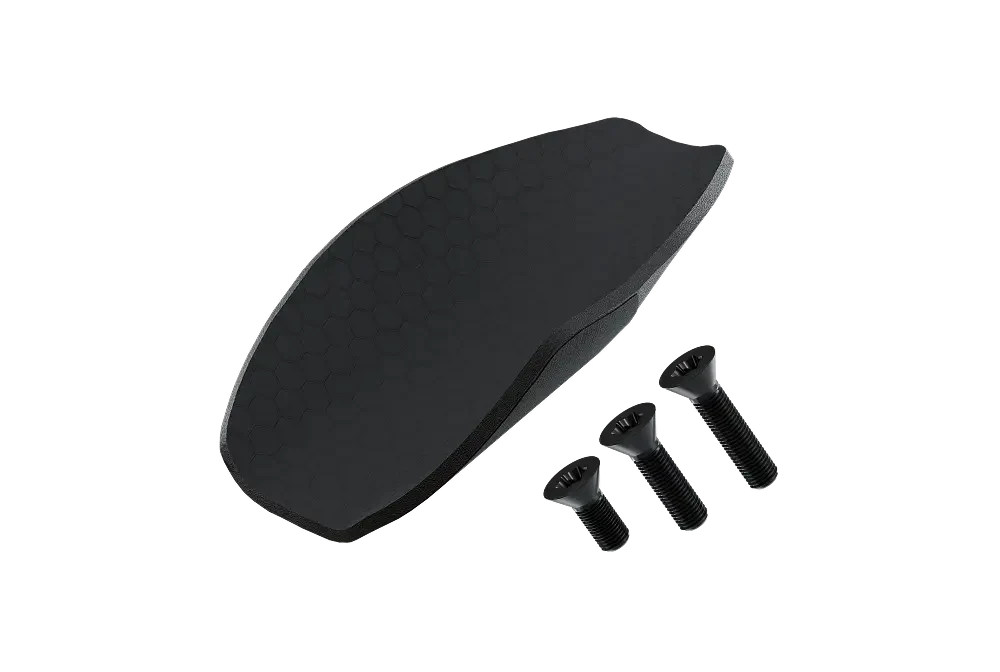
The forearms should feel supported rather than balanced on a small pressure point. Stable support reduces the need to grip the extensions and helps keep the upper body quiet. It also makes small steering corrections more controlled when wind or road movement changes the load.
Masamune is our unidirectional carbon monocoque aerobar platform for athletes who want integrated forearm support, wrist-angle control and a stable long-course position. Its high-density cushioning is designed to manage pressure and micro-vibration while the cockpit remains compact.

Start with the contact area. The pads should support the forearms without forcing the elbows onto an edge or creating one concentrated pressure point. Mark the position once it is correct and photograph the mounting arrangement before travel.
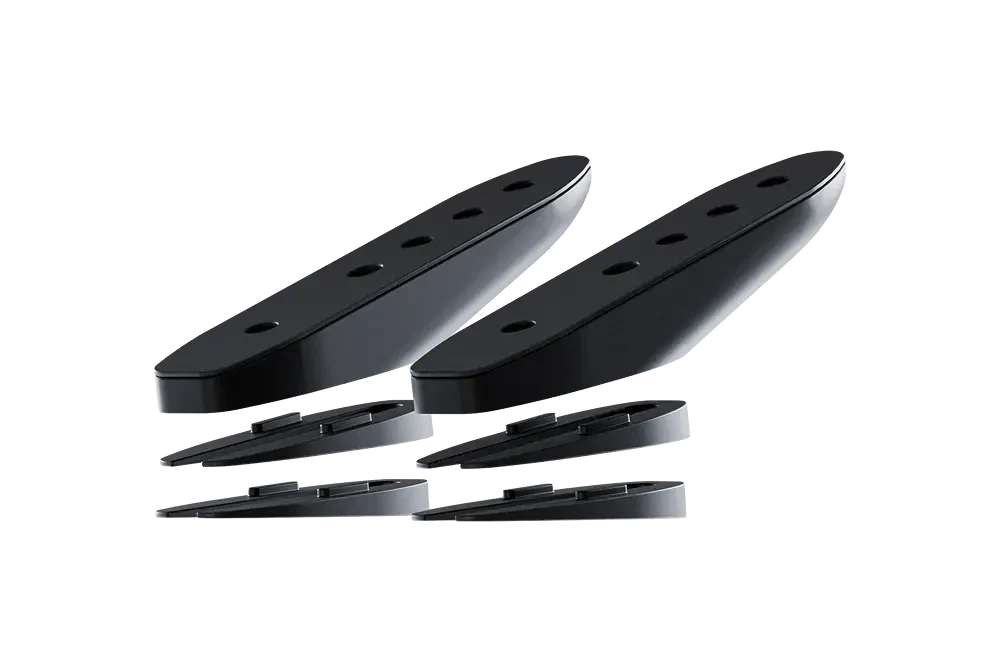
Tilt and wrist angle should place the hands naturally rather than forcing them upward. Our K Wedges are available in 10, 15 and 20 degree options for measured angle changes. They are adjustment tools, not shortcuts. Any change should be tested with the complete system and checked against the Assembly Guide.
A fast course makes front-end hydration valuable because sitting up repeatedly interrupts airflow and rhythm. The bottle should be reachable without searching, twisting the torso or changing elbow pressure. It must also remain secure over imperfect road surfaces.
Our adjustable-angle bottle holder allows the bottle orientation to be tuned to the cockpit. The Garmin and Wahoo holder keeps key data visible, while the bottle holder bar supports a clean between-the-arms layout. Build the system early enough to practise every refill and removal movement.
| Athlete profile | Main risk | Setup priority | Relevant Tetsuo resource |
|---|---|---|---|
| Strong cyclist chasing a personal best | Over-aggressive position or early pacing | Low drag with validated breathing and support | Configure Masamune |
| First-time full-distance athlete | Comfort loss after several hours | Stable pads, natural wrists and simple hydration | TAO X3 |
| Athlete sensitive to hand or wrist tension | Grip pressure and raised shoulders | Measured tilt and hand-angle adjustment | Wedges collection |
| Athlete travelling with the bike | Setup movement or missing hardware | Documented coordinates and organised spares | Spares collection |
| Athlete changing cockpit hardware | Compatibility or assembly error | Verify the interface before installation | Compatibility Guide |
The final training phase should connect fitness with execution. Include long rides in the exact cockpit configuration planned for race day. Use the same bottle positions, computer screen, nutrition storage and race clothing. The goal is to remove decisions before Calella.
Build sustained aero blocks at controlled intensity rather than only short threshold efforts. Practise returning to position after turns, bottle collection, standing and brief posture changes. A fast course rewards the athlete who can resume a clean position immediately without a long adjustment sequence.
Use our guide to triathlon aerobar measurements to record pad reach, pad stack, elbow width and extension position. For installation work, follow our process for installing triathlon aerobars. These records become especially valuable after transport.
Do not use race week to discover a new position. Use it to confirm the position already tested. Reassemble the bike with a calibrated torque wrench, consult the correct assembly instructions and compare every measurement with the pre-travel record.
Inspect pads, foam, screws, mounting interfaces, grips, hydration hardware and the computer mount. Look for movement, unusual noise, damaged threads or contact between accessories. Our aerobars maintenance guide provides a repeatable inspection process, and our spares section helps replace worn or missing hardware.
Complete a short outdoor ride after assembly. Use the brakes, shift through the gears, ride in aero, drink from the race bottle and confirm that the computer is readable. The test should verify function, not add fatigue. Make corrections early enough to repeat the check.
Plan the trip around the bicycle rather than treating it as normal luggage. Photograph the cockpit from above, below and both sides. Record measurements to fixed reference points and separate small hardware into labelled bags. Protect carbon components from direct load inside the case.
The 2026 Athlete Guide is still pending. Check the official pre-race information and event schedule when the final documents are released. Confirm check-in windows, bike racking, transition rules, briefing information and course updates directly with the organiser.

We are scheduled to be present at the Calella event expo with Tetsuo products and technical support. Athletes will be able to discuss cockpit compatibility, Masamune configuration, pad support, angle options, hydration placement and the components needed for their bike interface.
Check our channels closer to race week for the final stand location and availability. Bring clear photographs of the cockpit, the bicycle model details and the main measurements if you want a more useful technical conversation. You can also review the Compatibility Guide before travelling.
| Mistake | Why it costs performance | Better approach |
|---|---|---|
| Chasing speed in the opening bike kilometres | Adrenaline and fresh legs hide the real effort | Use a conservative power or effort cap until rhythm settles |
| Choosing the lowest possible position | Breathing, control and comfort may fail before the final hour | Choose the fastest position you can repeat for the full ride |
| Sitting up for every drink | Repeated posture changes add drag and break rhythm | Place hydration where it can be reached from the cockpit |
| Changing hardware during race week | There is no time to validate fit, torque and handling | Complete changes during training and use race week for checks |
| Using target speed against a headwind | Power rises while speed remains externally constrained | Regulate effort and accept the temporary speed change |
| Ignoring small cockpit movement | A minor shift can alter pressure, steering and confidence | Stop, inspect and correct the source before racing |
We would begin with the athlete, not the product. We would identify the position already proven in training, the pressure points that appear over time and the movements required for hydration, shifting and steering. Then we would check whether the existing bike interface can reproduce that position safely.
For a fast course, we would prioritise a quiet upper body, supported forearms and a hand position that does not require constant gripping. We would tune elbow width and tilt in small steps, confirm visibility of the computer and make sure the bottle can be used without leaving aero for longer than necessary.
We would then validate the complete configuration outdoors. That means riding at race intensity, in wind, with full bottles and with the exact clothing planned for the event. The final decision would be based on repeatability, not how aggressive the bicycle looks in a static photograph.
Athletes building a new front end can start with our Masamune configurator. Those comparing platforms can review how to choose triathlon aerobars, while athletes focused on bottle access can use our guide to aerobar hydration.
The race is scheduled for Sunday, 4 October 2026 in Calella, Spain. The detailed 2026 Athlete Guide is still pending, so athletes should confirm final check-in, briefing, transition and start information through the official event channels.
Yes. The organiser describes the bike course as fast and the run as flat. The event has recorded sub-eight-hour finishing times and is promoted as a personal-best course. Athletes still need disciplined pacing because sustained speed can hide an effort that is too high for the marathon.
The best setup combines low drag with repeatability. We would prioritise forearm support, relaxed shoulders, natural wrist angle, controlled elbow width, visible data and hydration that can be reached without a major posture change. The correct coordinates depend on the athlete and the bicycle interface.
No major change should be introduced without enough outdoor testing. Use the final weeks to validate small adjustments, then use race week to reproduce measured coordinates, inspect hardware and confirm function after transport.
Start below the effort that feels available, settle into planned power or perceived exertion and avoid chasing target speed when wind changes. Keep nutrition regular and judge the bike by how well it prepares the first half of the marathon, not only by the split shown in transition.
We are scheduled to be at the event expo. Final stand details will be shared closer to race week. Athletes seeking compatibility or setup support should bring cockpit photographs, bicycle details and their main fit measurements.

GETTING YOU FASTER
Configure your Masamune