


How to race IRONMAN 70.3 World Championship Nice 2026


IRONMAN 70.3 World Championship Nice 2026 brings the middle-distance world championship back to one of the most demanding and iconic triathlon stages in Europe. Nice is not a neutral venue. It combines Mediterranean water, mountain-influenced riding and a high-energy run along the Promenade des Anglais. For athletes who have earned a slot, the challenge is not only to arrive fit. It is to arrive with a race setup that stays efficient when the course becomes technical, hot, crowded and fast.
At Tetsuo, we look at this race through the cockpit because the front end becomes a decision-making tool during a world championship. If the position is too aggressive, the bike leg can cost control and nutrition. If the position is too relaxed, the athlete gives away free speed. The best answer is repeatability: supported forearms, stable shoulders, clean hydration access, visible data and a wrist angle that lets the body stay quiet while the road changes.
This guide covers what athletes can already prepare from the official information. IRONMAN has confirmed that detailed course maps for the 2026 edition are still to be released, so we avoid inventing turns, climbs or elevation numbers.

| Key detail | What to know |
|---|---|
| Date | 12 and 13 September, 2026 |
| Location | Nice, France |
| Format | IRONMAN 70.3 World Championship, middle-distance triathlon |
| Swim | Ocean swim, final 2026 map to be released |
| Bike | Hilly profile through the Nice region, final 2026 map to be released |
| Run | Flat run profile, expected race focus on rhythm and heat management |
| Typical preparation focus | Stable aero position, controlled climbing effort, front-end hydration and repeatable pacing |
IRONMAN 70.3 World Championship Nice 2026 is scheduled for 12 and 13 September, 2026 in Nice, France. It follows the two-day world championship format and returns to a city with deep history in long-distance triathlon, including the 2019 IRONMAN 70.3 World Championship.
The setting matters because Nice changes how athletes should think about preparation. This is a championship environment with international travel, higher athlete density and more pressure around check-in, bike racking and race-week routines. The best athletes will simplify everything they can before arriving.
The official event page already identifies the swim as ocean, the bike as hilly and the run as flat. That gives enough information to set the main preparation logic. You need a position that is aerodynamic on faster sections, controlled on climbing and descending roads, and open enough to manage breathing and heat. For athletes still building their front end, our Compatibility Guide should be checked before adding new components.
Nice rewards athletes who can change rhythm without changing posture. The full 2026 maps are not yet published, but the broad identity is already clear: sea, hills and a flat run corridor in a city that knows championship triathlon.
The course should not be prepared as a pure time-trial. A world championship bike leg in Nice asks for aerodynamic discipline, handling, measured power and confidence when gradients or wind alter the pressure on the front end.
The swim is listed by IRONMAN as an ocean swim. In Nice, that usually means athletes should prepare for salt water, glare, race-morning chop and a large field that can make the first minutes feel intense. Even when the sea is calm, a world championship start changes the sensation because everyone around you has qualified, everyone wants clear water and everyone is used to racing hard.
Your swim plan should protect the bike. A rushed start can leave the upper body tense before the longest discipline begins. Use the final race information to understand start format, buoy layout and exit flow, then rehearse the first minutes mentally.

IRONMAN describes the bike course profile as hilly. Until the final map is released, the safest preparation is to build for a course that requires position changes, steady climbing, confident descending and fast sections where aerodynamics still matter. Nice is famous for the relationship between coast and hinterland, and that race identity normally rewards athletes who can hold power without chasing speed every time the road opens.
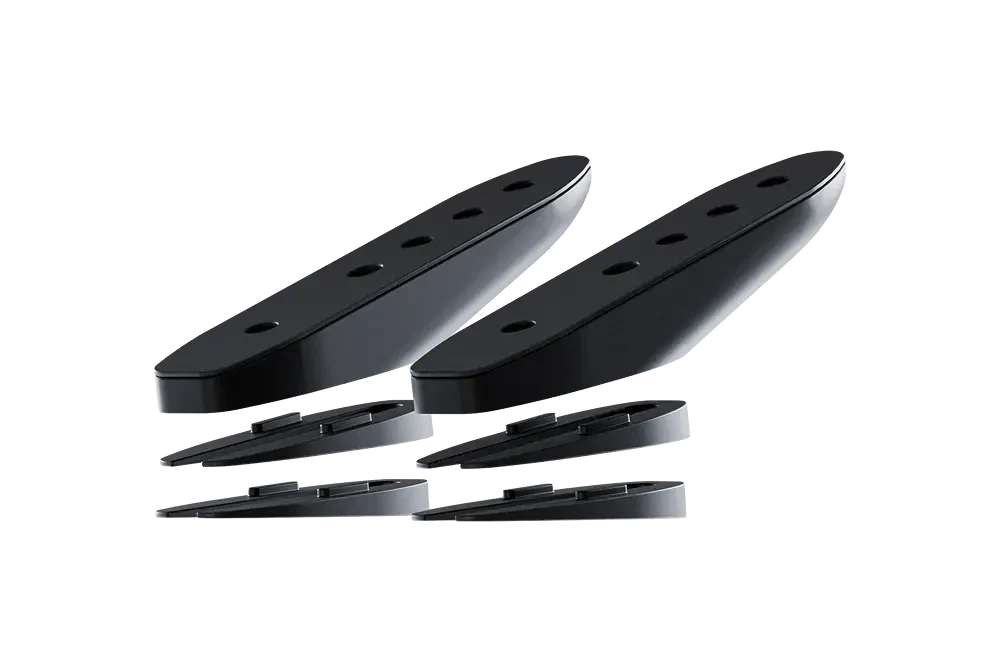
For the cockpit, hilly does not mean sitting up by default. It means the aero position must be usable, not fragile. Products such as Masamune are designed around support, wrist adjustment and long-distance stability. If you need to tune angle, K Wedges and the K / Z Wedge Adaptor allow controlled tilt choices rather than improvised spacer stacks.
The official race page lists the run profile as flat. That does not make it easy. Flat championship runs punish athletes who overbike because there are fewer natural rhythm breaks. The Promenade des Anglais also creates a strong emotional pull. Crowds, sea views and the feeling of being on the world stage can make the first kilometres feel easier than they are.
A good run starts on the bike. If the cockpit helped you eat, drink, stay low and avoid shoulder tension, the first kilometres are more likely to feel organised. Prepare the run by making the bike position sustainable.
The official event page lists typical high air temperature around 26 °C, low air temperature around 18 °C and average water temperature around 16 °C. Those figures are useful, but they should not be treated as a race-day guarantee. September on the Côte d'Azur can still feel warm, especially if the bike includes exposed sections and the run takes place under strong sun.
Heat changes cockpit priorities. A position that is only fast when breathing is easy may fail when core temperature rises. Your front end should let the rib cage move, keep the head position natural and make drinking automatic.
Wind is the other variable to respect. Coastal air, hillside roads and city corridors can create changing pressure on the bike. This is where pad support and elbow placement matter. When the elbows are stable, the hands guide the bike. When the elbows float or slide, the hands grip harder and the shoulders accumulate fatigue. Test this outdoors before race week, not only on the trainer.

The bike leg should be prepared around controlled effort, not ego. Championship fields can make athletes ride above plan because the density of strong competitors changes perception. In the first part of the ride, many athletes feel surrounded by speed. The correct response is to hold your numbers, stay smooth and keep nutrition on schedule.
For hilly terrain, separate terrain from panic. A short climb does not require a power spike. A descent does not require a tense upper body. The bike should feel like repeatable actions: settle into the pads, keep pressure steady, drink on time, look ahead and return to the same position.
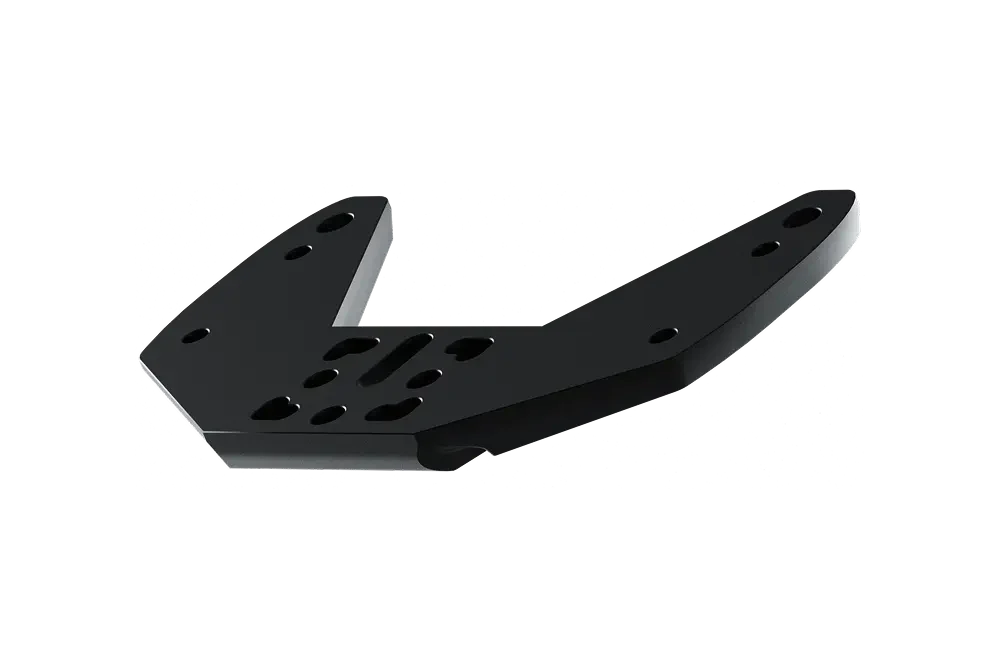
If your current reach feels too long or too short, solve it before travel with measured hardware rather than saddle compensation. Our Plates collection exists for that type of mechanical fit problem. Reach changes should preserve control, not move instability from one contact point to another.
Aerodynamics at this level are not a luxury. They are part of pacing. The question is whether you can keep the position while performing the basic tasks of racing: drinking, eating, checking power, looking through traffic and relaxing the neck. If any of those actions break the position, the aerodynamic setup is unfinished.
We use a simple test for athletes preparing an important race. Can you ride in aero, take a drink, see your computer, relax your hands, breathe deeply and return to the same elbow contact without thinking about it. If the answer is no, the position is not ready.
Use our guide on triathlon aerobar measurements to record the basics: hole distance, pad position, reach, width, stack and tilt. Then validate the setup in training. The most valuable fit is not the one that produces the lowest silhouette once. It is the one that reproduces itself every time the road changes.
The cockpit should be final before the taper. Nice already brings enough variables: travel, check-in, equipment transport, nutrition planning, weather monitoring and race briefings. The final weeks are for confirmation, not experimentation.
Pad support is the foundation of the position. If pressure sits on a small area, the body will move to escape it. On a hilly bike course, those small corrections multiply quickly.
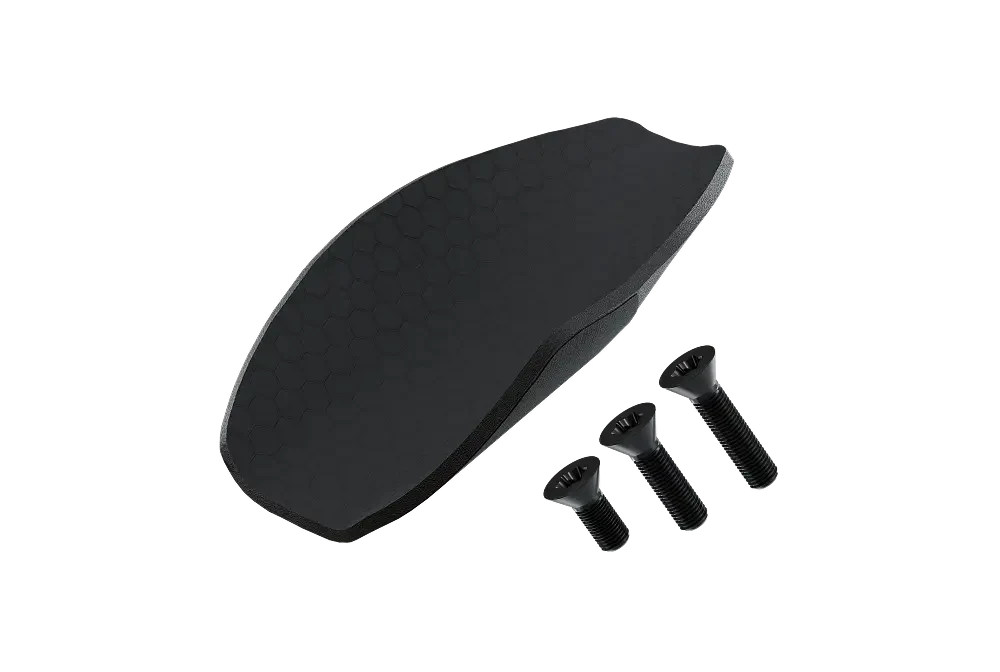
With Masamune, we design around long-course contact: carbon construction, cushioned support, wrist angle regulation and a front end that can be tuned for real race use. The objective is not to lock the athlete into one rigid shape. It is to create support that lets the athlete stay efficient without fighting the bike.
Reach and tilt should be adjusted with a reason. More reach can open the torso, but too much can pull the shoulders forward. More tilt can improve support, but too much can create neck or handling problems.
This is where K Wedges become useful because they make angle adjustment repeatable. The available tilt options make it easier to test a position, measure the change and return to it later. If you are still deciding between setups, make only one change at a time and ride it outdoors before judging.
Hydration access can decide whether a good plan survives race day. A bottle placed too far away becomes a posture break. A computer placed too low becomes unnecessary head movement.
Before travelling, check the cockpit as a system. Use the Assembly page during installation and our article on how to install triathlon aerobars if you want a step-by-step way to avoid guesswork. Once mounted, test the exact sequence you will use in Nice: drink, check data, shift, brake, climb, descend and return to aero.
| Area | Target | Why it matters in Nice |
|---|---|---|
| Pad contact | Pressure-free support across long rides | Reduces movement and shoulder tension |
| Reach | Hands fall naturally without pulling the shoulders | Improves control on climbs and fast sections |
| Tilt | Measured angle that supports the forearms | Helps hold aero without sliding |
| Hydration | Bottle access without sitting up | Protects pacing and cooling strategy |
| Computer view | Visible data with minimal head movement | Keeps power and pacing decisions simple |
Nice is accessible for international athletes, but a world championship still requires more planning than a standard race. Build your week around reducing friction. Arrive with time to rebuild the bike, check torque values, confirm the cockpit position and complete one controlled ride before racking. Do not make your first post-travel contact with the cockpit happen on race morning.
Pack the front end with the same seriousness as the frame and wheels. Screws, washers, torque tools, armrest foam, hydration mounts and computer mounts should be checked before the bike enters the case.
Race-week rides should be short and specific. Confirm shifting, braking, hydration access and handling. The goal is to verify that the bike feels familiar in local conditions.

The final preparation block should include race-position endurance. It is not enough to produce power on the base bar and hope the aero position will survive. Use steady rides where the main objective is to stay in position for longer than feels necessary. Add controlled climbs where you move between aero and climbing posture without a spike. Add descents where you practise relaxing the grip and looking through the road.
The second focus is heat and hydration rhythm. The typical temperatures for Nice make drinking and cooling important, especially for athletes arriving from cooler climates. Practise the exact drinking frequency you plan to use.
The third focus is measurement. Before the final month, document the setup. Our best triathlon aerobars guide gives a broader view of fit, comfort and speed.
The first mistake is preparing for the name of the race instead of the demands of the race. A world championship can make athletes overbuild, overreach and overcomplicate. Nice asks for speed, but it also asks for control.
The second mistake is waiting for the final course map before preparing the bike. Check the final athlete guide when it is published, but do not wait to solve hilly terrain, heat and cockpit stability.
The third mistake is changing multiple fit variables at the same time. If you move pads, tilt, reach and hydration together, you will not know what helped or hurt. Make one change, ride it, record it and decide. This is how a cockpit becomes a tool rather than a collection of parts.
The fourth mistake is copying another athlete. At Tetsuo, we do not believe the fastest setup is universal. The fastest setup is personal, measurable and repeatable.
We would start with the rider, not the product. Can the athlete breathe in position. Can they look ahead naturally. Can they drink without sitting up. Can they climb without collapsing the upper body. Can they descend with control. Can they return to the same pad contact after every interruption. These questions define the setup.
From there, we would build around three priorities. First, support: the pads and armrests must reduce pressure and keep the shoulders quiet. Second, adjustment: reach, tilt and wrist angle should be set with measured hardware, not guesswork. Third, integration: hydration and data should support pacing rather than interrupt it.
For athletes still comparing options, start with the Aerobars collection, verify the interface through the Compatibility Guide, and then use products such as Masamune, K Wedges and the Plates collection only where they solve a clear fit or compatibility need. For more race-specific reading, compare this guide with our articles on IRONMAN Copenhagen 2026, Vancouver T100 2026 and London T100 2026.
IRONMAN 70.3 World Championship Nice 2026 is scheduled for 12 and 13 September, 2026 in Nice, France. Athletes should confirm final check-in times, start details and athlete guide instructions through the official IRONMAN channels when they are published.
Yes. The official race page lists the bike profile as hilly. The final 2026 map is still to be released, so athletes should prepare for controlled climbing, stable handling and an aero position that remains usable when terrain changes.
The best setup is stable, comfortable and easy to operate. We would prioritise pad support, measured reach, controlled tilt, natural wrist angle, hydration access and computer visibility. The correct configuration depends on the athlete and bike interface.
No. Wait for the final map before making route-specific decisions, but do not wait to solve basic fit, compatibility and hydration issues. The fundamental cockpit requirements are already clear from the hilly bike profile and warm September conditions.
Yes, if the athlete respects the course and the logistics. Nice is iconic and well connected, but the race still demands disciplined pacing, travel planning and a cockpit setup that has been tested outdoors before race week.

TE LLEVAMOS MÁS RÁPIDO
Configura tu Masamune